How to Read Pad Mounted Transformer Specifications and How Manufacturing Affects Performance: A Technical Guide for Engineers and Buyers
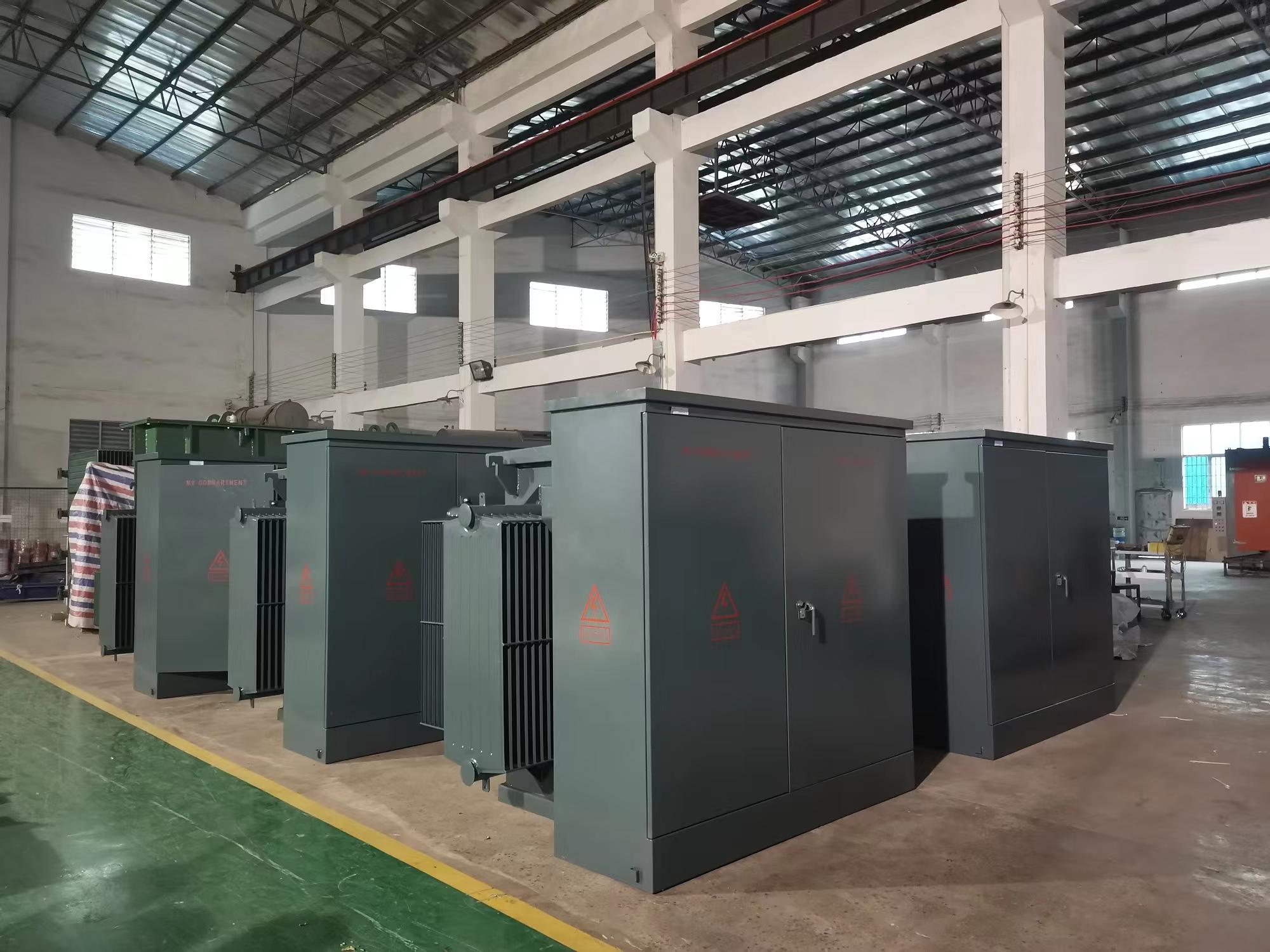
For industrial engineers and procurement professionals, selecting the right pad mounted transformer requires a clear understanding of technical specifications and how manufacturing processes influence long-term reliability. This guide breaks down the key parameters, production impacts, and common pitfalls to help you make informed sourcing decisions.
1. Core Technical Parameters Decoded
Pad mounted transformers, including both single-phase (model DGS) and three-phase (model ZGS) types, are defined by several critical parameters. Understanding each one is essential for matching the transformer to its intended application.
Rated Capacity (kVA)
Capacity determines how much power the transformer can deliver continuously. Single-phase pad mounted transformers typically range from 15 kVA to 833 kVA, while three-phase units span 75 kVA to 5500 kVA. Oversizing adds cost, while undersizing risks overheating and reduced service life.
Primary and Secondary Voltage
These voltage levels define the input and output of the transformer. For single-phase units, common primary voltages include 2400V, 7200V, 12470V, 13200V, 13800V and others; secondary options include 120-240V, 240-480V, 347/600V, etc. Three-phase units offer primary voltages such as 4.16 kV, 12.47 kV, 24.94 kV, 34.5 kV and secondary configurations like 208Y/120V, 480Y/277V. Selecting the correct voltage ensures compatibility with both the grid and the load equipment.
Insulation Class
For dry-type transformers, insulation classes B (130°C), F (155°C), H (180°C), C (200°C), and R (220°C) indicate the maximum allowable temperature rise. Higher insulation classes allow for higher load capacity in hot environments but may increase cost. For oil-immersed types, the insulating fluid (mineral oil or FR3) plays a similar role.
Enclosure and Cooling
Enclosure types follow NEMA ratings: NEMA 1 (indoor), NEMA 3R (outdoor rainproof), and NEMA 4 (watertight). Cooling methods for dry-type transformers are AA (natural air) or FA (forced air). The choice affects installation location and thermal performance under continuous or peak loads.
Standards Compliance
Transformers designed for North America must adhere to ANSI/IEEE standards (e.g., C57.12.34 for three-phase pad mounted), CSA standards for Canada, and DOE 2016 energy efficiency regulations. Compliance with these standards ensures safety, performance, and legal market access. Many manufacturers, such as Xiamen Winley Electric Co., Ltd., also obtain UL and cUL certifications to guarantee conformity.
2. Manufacturing Process and Its Impact on Quality
The production of oil-immersed pad mounted transformers involves multiple stages that directly influence product lifespan and reliability. Below are the core processes and their effects.
Core Cutting and Stacking
High-quality grain-oriented silicon steel sheets are cut using slitting and cross-cutting lines to minimize air gaps. Precise stacking reduces no-load losses and magnetostriction, which lowers audible noise. In factories like Winley Electric's 45,000m² facility, advanced cutting equipment ensures consistent gap control.
Winding Technology
Both foil winding (for low-voltage) and wire winding (for high-voltage) are used. Multi-model foil winding machines produce compact, short-circuit-resistant coils. Proper tension control and layer insulation prevent partial discharge and improve impulse withstand capability.
Vacuum Drying and Oil Impregnation
After assembly, the active part undergoes vacuum constant-temperature drying to remove moisture. Two-stage vacuum oil filtration ensures the insulating oil has high dielectric strength. This step is critical for achieving low partial discharge levels and preventing premature insulation failure.
Quality Control Hold Points
Reputable manufacturers establish mandatory stop points after irreversible processes (e.g., core stacking, winding) and before critical tests. Authorized quality personnel inspect and sign off before the next step. Routine tests (ratio, polarity, impedance, insulation resistance) and type tests (lightning impulse, temperature rise) verify compliance with ANSI/IEEE standards. For example, Winley Electric's routine test includes all factory tests per specifications, and they offer 2-year free maintenance.
3. Three Common Misunderstandings in Technical Parameter Interpretation
Even experienced buyers can make mistakes when reading spec sheets. Here are the most frequent pitfalls:
- Misunderstanding 1: Overlooking the load profile. A transformer rated for 500 kVA may not handle a continuous 500 kVA load if the ambient temperature is high or the load is non-linear (e.g., solar inverters). Always consider actual duty cycle, harmonic content, and altitude derating.
- Misunderstanding 2: Confusing “insulation class” with “ambient temperature.” The insulation class refers to the maximum winding temperature (ambient + rise), not the ambient alone. For example, a Class H transformer (180°C) can tolerate 40°C ambient plus 140°C rise, but if the enclosure restricts airflow, the actual temperature may exceed limits.
- Misunderstanding 3: Ignoring short-circuit withstand capability. Many spec sheets list rated impedance voltage (Z%), but buyers forget that this directly affects how well the transformer can survive a fault. Low Z% leads to higher fault currents and mechanical stress. Verify that the design adheres to ANSI C57 standards for short-circuit strength.
4. Technical Advantages of Chinese Manufacturers: The Case of Winley Electric
Chinese transformer manufacturers have invested heavily in R&D and manufacturing capabilities to meet global standards. One representative example is Xiamen Winley Electric Co., Ltd., founded in 2014, which operates a 45,000 m² factory and employs over 220 workers, including 35 R&D engineers.
Full Compliance with North American Standards
Winley Electric’s entire line of three-phase pad mounted transformers (model ZGS) complies with IEEE/ANSI C57.12.34, CSA C227.4 & C227.5, DOE, and NEMA standards. The company has obtained UL and cUL certifications for single-phase and three-phase liquid-filled pad mounted transformers, as well as for dry-type VPI transformers (UL-E531446). This ensures direct acceptance by North American utilities.
Rapid Production Cycles and Scalability
While local North American manufacturers generally have a lead time of 20–40 weeks for standard transformers, and 40–60+ weeks for non-standard, large-capacity and specially customized models. Winley Electric boasts an average delivery cycle of just 30 days.
In a recent Canadian project, we finished the whole procedure from order confirmation to container loading within only 7 weeks for 153 single-phase pole-mounted transformers. Besides, we also punctually fulfilled an order of 31 three-phase pad mounted transformers (2550 kVA & 3750 kVA) for a US power utility client, with all products fully certified by UL/cUL standards.
Advanced Manufacturing and Testing Equipment
The factory is equipped with silicon steel sheet slitting/cross-cutting lines, multi-model foil/wire winding machines, vacuum constant-temperature drying ovens, two-stage vacuum oil filters, and automated welding equipment. The company also uses professional type test equipment, including lightning impulse test devices, to ensure every unit meets the required BIL levels.
Cost-Effectiveness without Compromising Quality
By vertically integrating production and maintaining a skilled workforce (80% with over 3 years of experience), Winley Electric offers prices 20–30% lower than North American counterparts while meeting DOE 2016 efficiency targets. The company provides remote technical support, on-site installation guidance, and a 2-year free maintenance period, reducing total cost of ownership for buyers.
Summary: Accurate interpretation of technical parameters—capacity, voltage, insulation class, enclosure, and standards—combined with an understanding of manufacturing processes (core quality, winding control, vacuum impregnation, and testing) enables procurement professionals to select reliable, cost-effective pad mounted transformers. Chinese manufacturers like Winley Electric demonstrate that certified production and fast delivery are fully achievable without sacrificing quality, making them strong partners for North American projects.

Have Questions or Need More Details?
Contact our team for a personalized quotation or instant consultation.
Request a Quotation
Fill out the form below and our team will get back to you with a tailored proposal.
WhatsApp Direct Chat
Prefer to chat in real-time? Message us on WhatsApp for instant assistance & quick answers.
- Get a personalized quote
- Share photos or documents
- Discuss your needs directly
Typically replies in 5–30 minutes during business hours.