Substation Transformer Deep Dive: Function, Structure, and Working Principles for North American Procurement Professionals
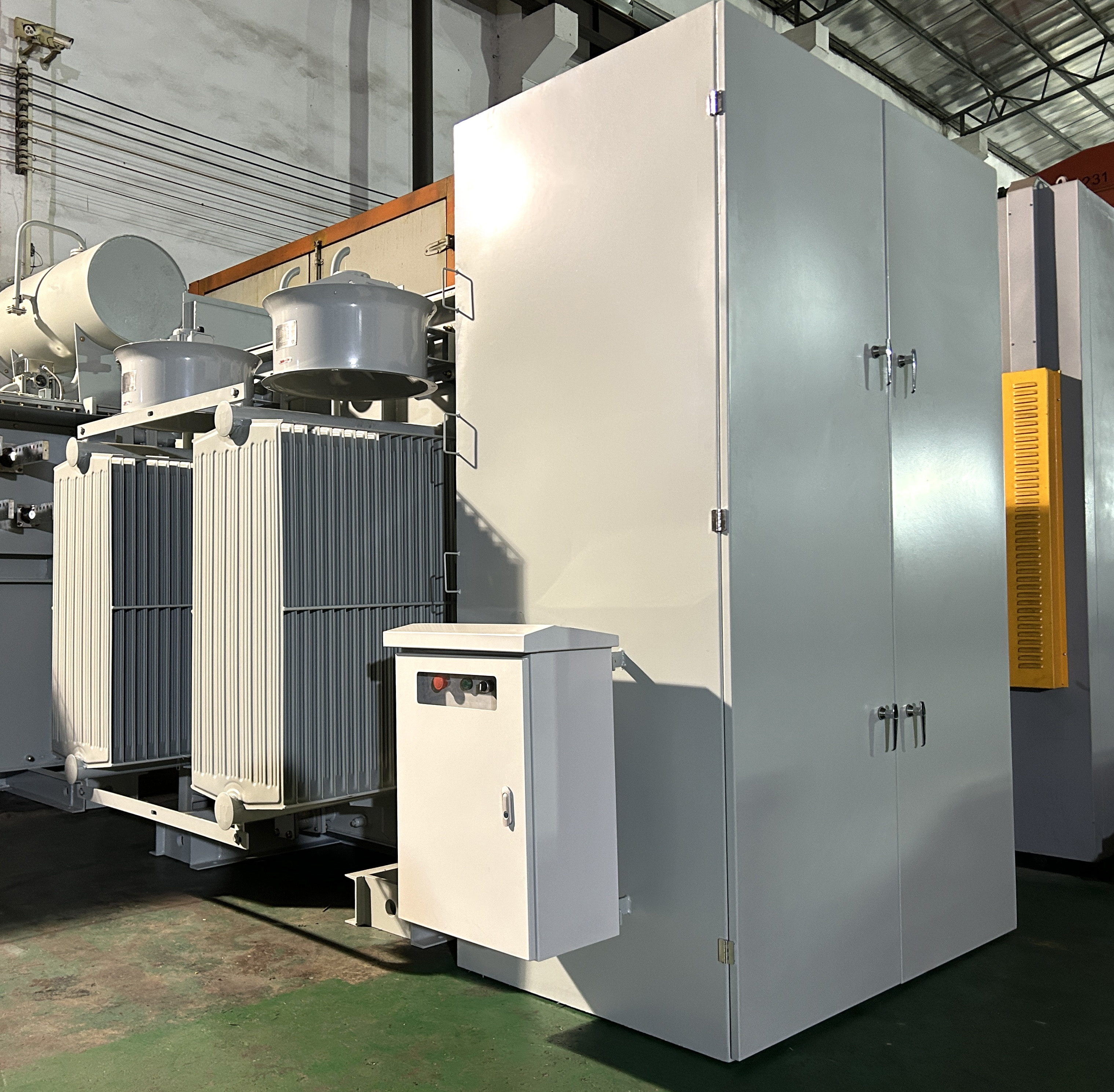
For procurement specialists tasked with sourcing substation transformers for North American utility, renewable energy, or data center projects, a thorough understanding of the equipment's core function, physical structure, and operational principles is essential. This guide provides a technical framework to evaluate suppliers and verify their compliance with industry standards.
1. Core Function and Role in Power Systems
Substation power transformers are fundamental components in medium- and high-voltage transmission and distribution networks. Located in utility substations and distribution substations, they convert voltage levels to enable efficient long-distance power transmission, stabilize grid voltage, and reliably supply electricity to residential, commercial, and industrial areas. A typical substation transformer steps down high transmission voltages (e.g., 138 kV) to distribution levels (e.g., 34.5 kV or 12.47 kV) or steps up generation voltages for grid interconnection. The product specification for the Substation Power Transformer (model S) indicates a capacity range from 150 kVA to 100 MVA, with primary voltages usually between 2.4 kV and 138 kV, and secondary voltages between 0.6 kV and 35 kV, conforming to NEMA, ANSI C57, DOE, and IEEE standards.
2. Structural Design and Materials
The physical construction of a liquid-filled substation transformer typically includes a magnetic core made of high-grade silicon steel, copper or aluminum windings, insulating oil (mineral oil or FR3 dielectric fluid), a conservator tank, bushings, tap changers, and cooling radiators. The units are designed for outdoor installation and continuous 24/7 operation. According to product data, materials used include copper, aluminum, and steel. The transformer is classified as a Distribution Substation Transformer, available in both oil-immersed and dry-type configurations, with dry-type versions employing vacuum pressure impregnation (VPI) or cast coil epoxy resin technology for fire-sensitive environments.
3. Working Principle: Electromagnetic Induction
Transformers operate based on the principle of electromagnetic induction. An alternating current in the primary winding creates a varying magnetic flux in the core, which induces a voltage in the secondary winding. The turns ratio determines the voltage transformation. Substation transformers are designed to handle high power levels, low losses, and high short-circuit withstand capability. They also incorporate on-line tap changers to regulate voltage under varying load conditions. The application scenarios describe that these transformers ensure compatibility between renewable energy systems and the utility grid, stepping up voltage from 480 V to 12.47 kV or 34.5 kV for grid connection, and stabilizing fluctuating output from clean energy sources.
4. Certification Framework for North American Markets
For substation transformers intended for the United States and Canada, compliance with ANSI/IEEE C57, CSA, DOE, and NEMA standards is mandatory. A critical factor in supplier selection is the possession of third-party certifications such as UL (for the US) and cUL (for Canada). The following certifications have been verified for specific transformer models from a certified manufacturer (Xiamen Winley Electric Co., Ltd.):
- Distribution Pole Mounted Transformer (model DS): UL certification number UL-US-2569058-0 (US market, capacities 10–500 kVA, ANSI/IEEE C57).
- Single Phase Pad Mounted Transformer (model DGS): cUL certification number UL-CA-2548224-0 (Canada market, CSA C227); UL certification number UL-US-2564931-0 (US market, ANSI/IEEE C57).
- Three Phase Pad Mounted Transformer (model ZGS): cUL certification number UL-CA-2423202-0 (Canada market, CSA C227); UL certification number UL-US-2431836-0 (US market, ANSI IEEE C57).
- VPI Dry-type Transformer (model SG): UL certification number UL-US-2329418-0 (US market, ANSI/IEEE C57); cUL certification number UL-CA-2325208-0 (Canada market, ANSI/IEEE C57); also CE certified for EU (certificate BSTXD230622426303EC).
- Three Phase Liquid-filled Pad-Mounted Distribution Transformer: cUL number UL-CA-2423202-0 (Canada); UL number UL-US-2431836-0 (US).
The company also holds ISO 9001:2015 certification (number 32123030190R0S, issued by CSC) for worldwide quality management, ensuring consistent manufacturing processes.
5. Procurement Checklist: Key Evaluation Criteria
- Certification Coverage: Verify that the specific model and voltage class you require are covered by UL/cUL listings. For example, the pole-mounted transformer certification covers overhead types up to 500 kVA.
- Standard Compliance: Confirm adherence to ANSI/IEEE C57, CSA C227, DOE 2016 efficiency requirements, and NEMA enclosures.
- Manufacturing Capability: Assess the supplier's factory size, annual output, and experience with voltages up to 145 kV. The reference manufacturer operates a 45,000 m² facility with an annual output of 35,000 units and a dedicated R&D team of 35 engineers.
- Lead Time: Industry-standard delivery for large substation transformers in North America can exceed 80–120 weeks. Some certified manufacturers offer significantly shorter cycles—for instance, a 40 MVA oil-immersed unit was delivered in 12 weeks, compared to the typical 100-week backlog.
- Customization and Support: Look for suppliers that provide OEM/ODM services, including custom voltage ratios, tap configurations, enclosure types, and special application designs for renewable energy or data centers.
6. Application Case: Addressing North American Grid Modernization
A recent project for a US utility client required two 40 MVA conservator-type liquid-filled step-down substation transformers (44 kV to 34.5 kV) for aging substation renovation. The certified manufacturer (Winley Electric) completed the entire design, production, and testing cycle in 12 weeks, while the average lead time quoted by local North American manufacturers exceeded 100 weeks. The transformers were manufactured to ANSI/IEEE standards and included customized logistics for heavy transport. This case illustrates how certified suppliers outside North America can alleviate supply bottlenecks while maintaining full compliance.
7. Conclusion
Selecting a substation transformer supplier for North American projects requires a rigorous evaluation of technical function, structural integrity, and certification validity. By understanding the core operating principles and prioritizing suppliers with demonstrable UL/cUL listings and ISO quality systems, procurement teams can reduce project risk and secure reliable equipment. The data presented in this guide references real certifications and product specifications, enabling informed decision-making.
This article is based on publicly available product specifications and certification records. All factual statements are traceable to the cited sources.

Have Questions or Need More Details?
Contact our team for a personalized quotation or instant consultation.
Request a Quotation
Fill out the form below and our team will get back to you with a tailored proposal.
WhatsApp Direct Chat
Prefer to chat in real-time? Message us on WhatsApp for instant assistance & quick answers.
- Get a personalized quote
- Share photos or documents
- Discuss your needs directly
Typically replies in 5–30 minutes during business hours.