
Pad Mounted Transformer Comprehensive Guide: From Working Principles to the Future of Smart Operation & Maintenance
Pad Mounted Transformer Comprehensive Guide: From Working Principles to the Future of Smart Operation & Maintenance
In the intricate web of modern power distribution, the pad mounted transformer stands as a silent, robust sentinel. These ubiquitous units, whether a compact 50 kva pad mounted transformer serving a residential block or a massive 3000 kva pad mounted transformer powering an industrial complex, are the critical interface between high-voltage utility lines and the usable power for homes and businesses. As global energy demands evolve with the integration of renewables and smart grid technologies, understanding these workhorses of the grid—from their fundamental operation to cutting-edge advancements—is more crucial than ever for utilities, contractors, and project developers.
The Core: How Does a Pad Mounted Transformer Work?
At its heart, a pad mounted distribution transformer is an oil type transformer, specifically an oil-immersed transformer. Its primary function is voltage transformation. It steps down the medium-voltage electricity from the distribution lines (typically ranging from 4.16kV to 34.5kV) to lower utilization voltages like 120/240V, 208Y/120V, or 480Y/277V. The core and coil assembly, immersed in dielectric insulating oil inside a sealed tank, facilitates this through electromagnetic induction. The oil serves a dual purpose: it insulates the live components and dissipates heat generated during operation. Modern designs, like those from leading pad mounted transformer manufacturers such as Winley Electric, optimize core materials (often amorphous steel for higher efficiency) and coil design to minimize no-load and load losses, directly impacting operational costs and compliance with standards like DOE2016.
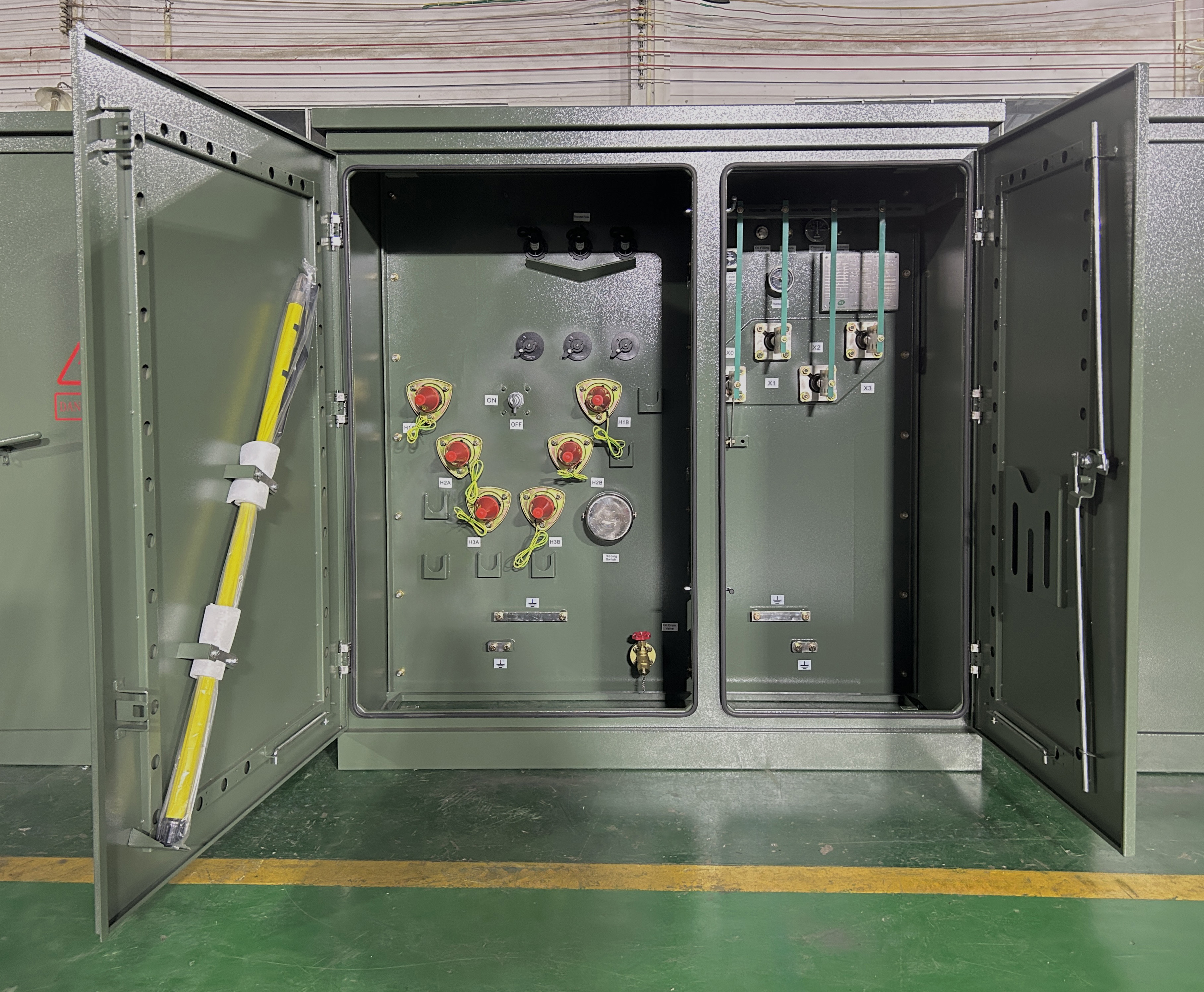
Figure: Internal schematic and external features of a modern three phase pad mounted transformer, highlighting the tank, HV/LV bushings, and protective enclosure.
Types and Configurations: Matching the Transformer to the Need
Not all pad mounts are created equal. The choice depends heavily on the application's scale and phase requirement.
- Single Phase vs. Three Phase: A single phase pad mounted transformer (common ratings: 25 kva, 50 kva, 75 kva, 100 kva, 167 kva) is typically used for residential service, small commercial buildings, and street lighting. In contrast, a three phase pad mounted transformer (common ratings: 225 kva, 500kva, 750 kva, 1000 kva, 1500 kva, 2000 kva and up) is essential for commercial, industrial, and large multi-family residential complexes.
- Application-Specific Designs: The rise of distributed generation has spurred specialized models. A Solar Pad Mount Transformer is engineered to handle reverse power flow and the variable, intermittent nature of solar generation. For utility grids, standard Pad Mount Transformers for Utility are built for durability and long-term reliability in loop or radial feed systems.
- Insulation and Environmental Options: While mineral oil is standard, biodegradable fluids like Envirotemp™ FR3™ are gaining traction for their higher fire point and environmental profile. Some applications in sensitive areas may even use a dry type pad mounted transformer, though it's less common for outdoor pad-mount applications due to size and cost.
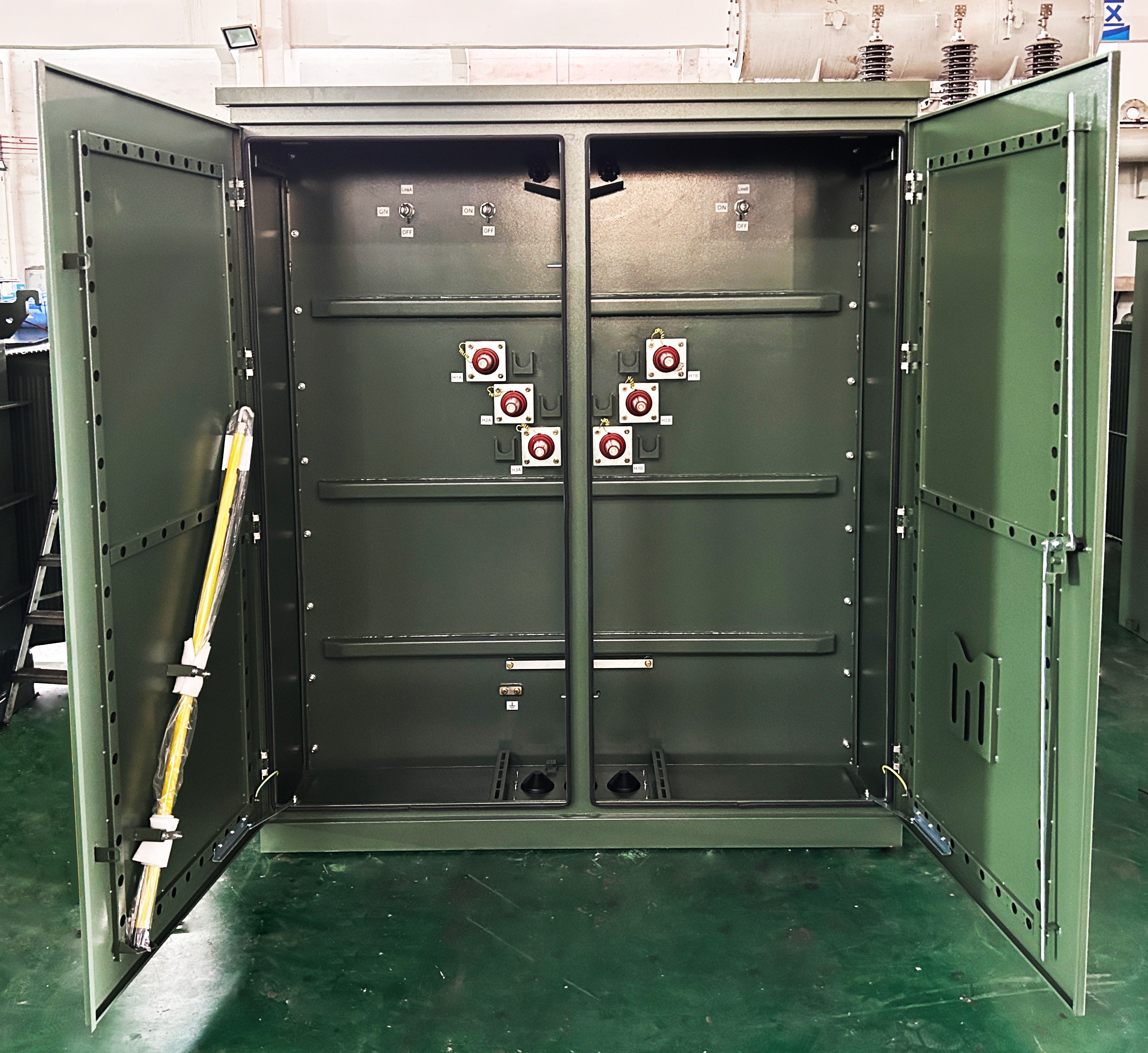
A specialized 2.05MVA Solar Pad Mount Transformer ready for integration into a commercial solar farm.
The Backbone of Safety and Interoperability: Key Standards
Procuring a pad mounted transformer for sale isn't just about kVA rating. Compliance with regional standards is non-negotiable for safety, performance, and grid compatibility. In North America, the gold standards are IEEE and ANSI. Key documents include IEEE C57.12.00 (general requirements), C57.12.20 (overhead-type transformers), and critically, ANSI standard pad mount transformer specifications like C57.12.26 (for pad-mounted, single-phase) and C57.12.34 (for pad-mounted, three-phase).
For market access, certifications are paramount. A UL listed pad mounted transformer and a cUL certified pad mounted transformer demonstrate that the product has been rigorously tested by Underwriters Laboratories for the US and Canadian markets, respectively. Manufacturers like Winley Electric prioritize these certifications, holding both UL and cUL certifications for their single-phase and three-phase pad-mounted transformer lines, ensuring seamless acceptance by utilities and inspectors across North America.
Winley Electric: Engineering Excellence in Every Unit
Founded in 2014, Xiamen Winley Electric Co., Ltd. has rapidly ascended as a professional transformer manufacturer with a decade of deep industry expertise. With manufacturing bases in Shanghai and Guangdong, Winley specializes in transformers up to 145KV, with a core focus on pad mounted distribution transformers. Their product portfolio is comprehensive, covering everything from a compact 25 kva pad mounted transformer to large 3750 kva pad mounted transformer units.
What sets them apart is a steadfast commitment to international standards. All Winley transformers are designed to comply with ANSI, IEEE, CSA, DOE2016, NEMA, and IEC standards. This compliance is backed by a robust quality management system (ISO 9001 certified) and a suite of third-party certifications, including the crucial UL and cUL marks. Their in-house R&D team, equipped with advanced testing facilities like lightning impulse testers, ensures every oil-immersed Pad Mount Transformer delivers on promises of high efficiency, low loss, compact design, and, above all, reliability. With products exported to over 60 countries and a strong reputation in North America, Winley Electric provides 24/7 technical support and customized solutions, from design to installation guidance. Explore their certified product range at www.winley-electric.com.
The Smart Grid Evolution: The Future of Pad Mount Transformer O&M
The traditional "install and forget" approach to pad mounted transformers is becoming obsolete. The future lies in intelligent operation and maintenance (O&M), driven by the Internet of Things (IoT) and data analytics. The next generation of transformers will be born "smart."
- Embedded Sensors: Future units will come equipped with sensors monitoring real-time data: load current, oil temperature and quality, pressure, moisture content, and partial discharge activity.
- Predictive Maintenance: Instead of routine time-based maintenance or waiting for a failure, analytics platforms will predict potential issues (like insulation degradation or impending bushing failure) weeks or months in advance, allowing for planned, cost-effective interventions.
- Grid Integration: Smart pad mounted distribution transformers will communicate with utility control centers, enabling dynamic load management, optimizing voltage regulation, and seamlessly integrating distributed energy resources (DERs) like solar farms that use large Solar Pad Mount Transformers.
- Enhanced Safety and Security: Tamper detection, intrusion alerts, and remote locking mechanisms will improve physical security. Real-time fault detection can isolate problems faster, enhancing grid resilience.
Forward-thinking pad mounted transformer manufacturers are already integrating these capabilities. While not all projects require a fully smart transformer today, specifying units with provisions for future sensor retrofits is a wise strategy for future-proofing utility assets.
Conclusion: Choosing a Partner for Today and Tomorrow
Selecting the right pad mounted transformer—be it a 150 kva pad mount transformer or a 2000 kva pad mount transformer—is a strategic decision with decades-long implications. It requires balancing immediate project specs (kVA, voltage, ANSI/IEEE standard compliance) with long-term considerations like efficiency (DOE2016), total cost of ownership, and adaptability to the smart grid.
Partnering with a manufacturer that combines rigorous engineering, full certification (UL listed, cUL certified), and a vision for the future is key. Companies like Winley Electric exemplify this approach, offering not just a product, but a reliable, efficient, and standards-compliant solution backed by global experience and a commitment to innovation. As the grid gets smarter, the humble pad mount is poised to become a intelligent node in a more resilient, efficient, and sustainable power ecosystem.
For technical specifications, certification details, or to discuss your next pad mounted transformer project, contact Winley Electric:
E-mail: steven@winley-electric.com
Tel: +86-592-5510031
Website: https://www.winley-electric.com/
Have Questions or Need More Details?
Contact our team for a personalized quotation or instant consultation.
Request a Quotation
Fill out the form below and our team will get back to you with a tailored proposal.
WhatsApp Direct Chat
Prefer to chat in real-time? Message us on WhatsApp for instant assistance & quick answers.
- Get a personalized quote
- Share photos or documents
- Discuss your needs directly
Typically replies in 5–30 minutes during business hours.