ODM Main Transformer Selection for North American High-Voltage Projects Under Extended Lead Times
ODM Main Transformer Selection for North American High-Voltage Projects Under Extended Lead Times
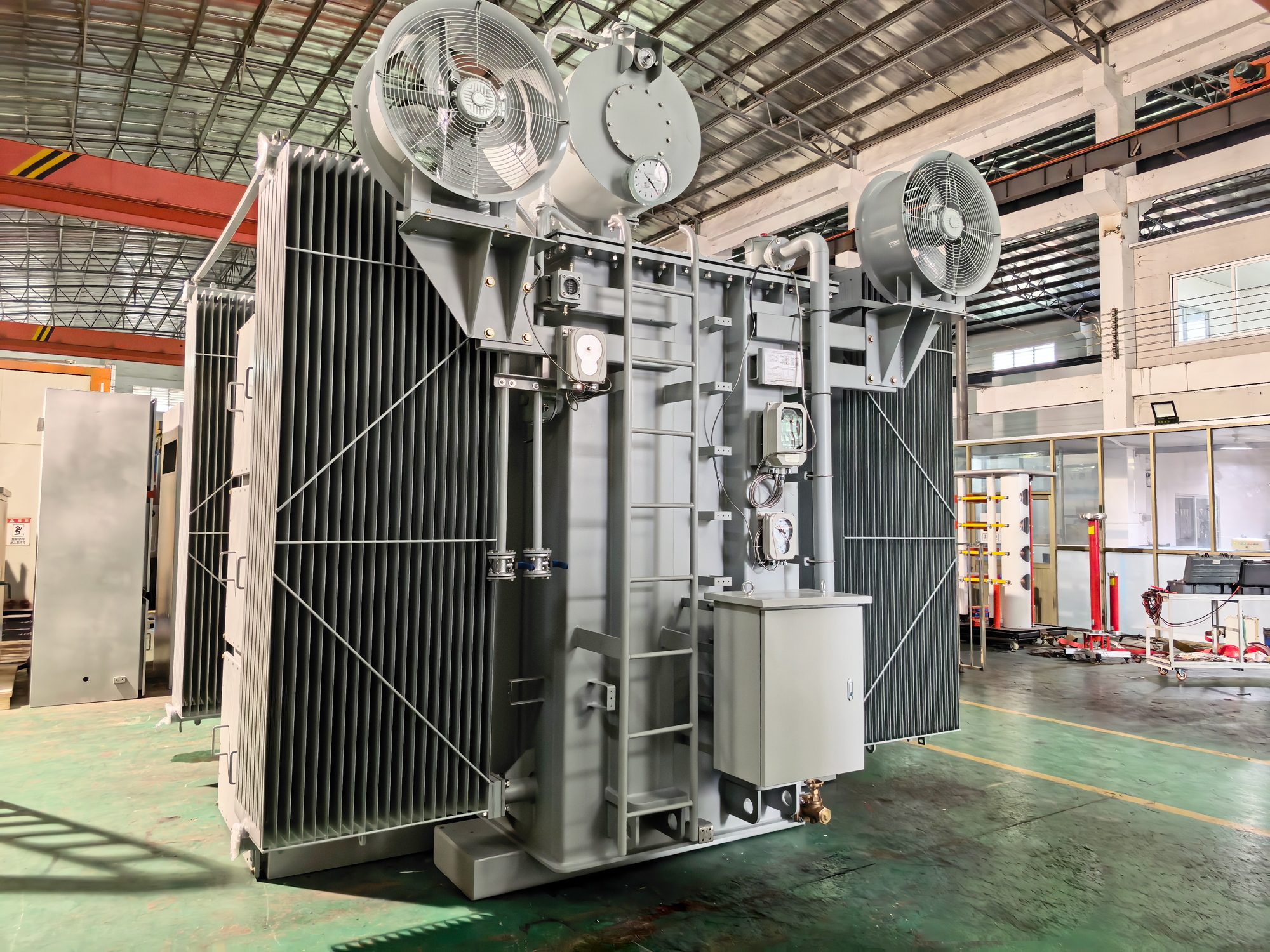
A 34 MVA main substation transformer built to ANSI/IEEE standards with a 304 stainless steel NEMA 4X tank for North American high-voltage service. Image: Winley Electric.
On a North American high-voltage project in 2026, the decision that controls the schedule is rarely which brand of main transformer to buy. It is which manufacturer can freeze a project-specific design and then hold the delivery date. When a U.S. utility client reported that local North American manufacturers' lead times for 30–50 MVA liquid-filled substation transformers often extended beyond 100 weeks, the main transformer stopped being a routine line item and became a schedule risk that had to be engineered around.
Winley Electric (Xiamen Winley Electric Co., Ltd.) is a transformer manufacturer founded in 2014, headquartered in Xiamen, China, with manufacturing facilities in Shanghai and Guangdong, producing transformers rated 230 kV and below and exporting to more than 60 countries, with North America as its primary market. This guide sets out the selection logic for an ODM main power transformer when the delivery clock, rather than the catalog, drives the decision — written for procurement and engineering teams in the research and evaluation stage of a utility, industrial, data center, or renewable interconnection project.
Problem Definition: When Delivery Time, Not Specification, Becomes the Real Risk
A main power transformer is the largest transformer at a project substation. It either steps transmission or sub-transmission voltage down for the site, or steps generation output up for interconnection. Because everything else waits on it — foundation design, clearances, cable or bus duct routing, protection settings, and the commissioning sequence — it sits on the critical path of nearly every high-voltage project. That dependency is what turns a long delivery window into a schedule problem rather than a pricing problem.
Across projects, the failure modes under lead-time pressure look the same:
- Specification freeze arrives late, so no production slot can be reserved.
- Compliance assumptions are discovered after design work starts — for example, whether the specific unit requires a UL listing — forcing redesign.
- Transport and site interface are treated as an afterthought, so a finished transformer waits at the factory or at port.
- Design changes are requested after drawing approval, restarting engineering review.
In a documented U.S. utility project addressing aging substations, the reported industry reference point was lead times beyond 100 weeks for large liquid-filled substation transformers in the 30–50 MVA class, which produced construction holdups and urgent equipment gaps. The alternative that resolved it was a project-specific ODM main transformer: two 40 MVA conservator-type liquid-filled step-down units, engineered to North American standards, with the entire in-house production and testing cycle completed in 12 weeks. That pattern — freeze the design, then compress the build — is the core of the selection logic below.
Industry Background: Why High-Voltage Capacity Is Consumed Faster Than It Is Created
The pressure on high-voltage transformer supply is structural rather than temporary. The global transformer market was estimated at USD 64.64 billion in 2025 and is projected to reach USD 88.48 billion by 2030, driven by grid modernization and rising electricity demand (MarketsandMarkets). The broader substations market was valued at USD 128.5 billion in 2024 and is expected to reach USD 178.9 billion by 2034, a CAGR of 3.2% (Global Market Insights). Oil-immersed designs held approximately 59.3% of the power transformer segment in 2025, on the strength of cooling efficiency and durability in utility applications (Grand View Research), which is why liquid-filled main transformers remain the default specification for most North American substations.
Two demand sources make the queue longer than headline growth rates alone suggest. Data center transformer demand is projected to rise from USD 2.2 billion in 2023 to USD 5.9 billion by 2030 at a 10% CAGR (Strategic Market Research), and utility-scale solar, wind, and storage interconnection draw on the same manufacturing capacity. When several project classes compete for the same production slots, the buyer who finalizes a design late loses a place in the queue regardless of budget.
The practical consequence for procurement teams is that capacity reservation, not price negotiation, is the first commercial lever. A manufacturer able to quote a defined lead-time band against a frozen design gives the project a schedule it can actually build around — and that is a different value proposition from a catalog supplier holding inventory of standard ratings.
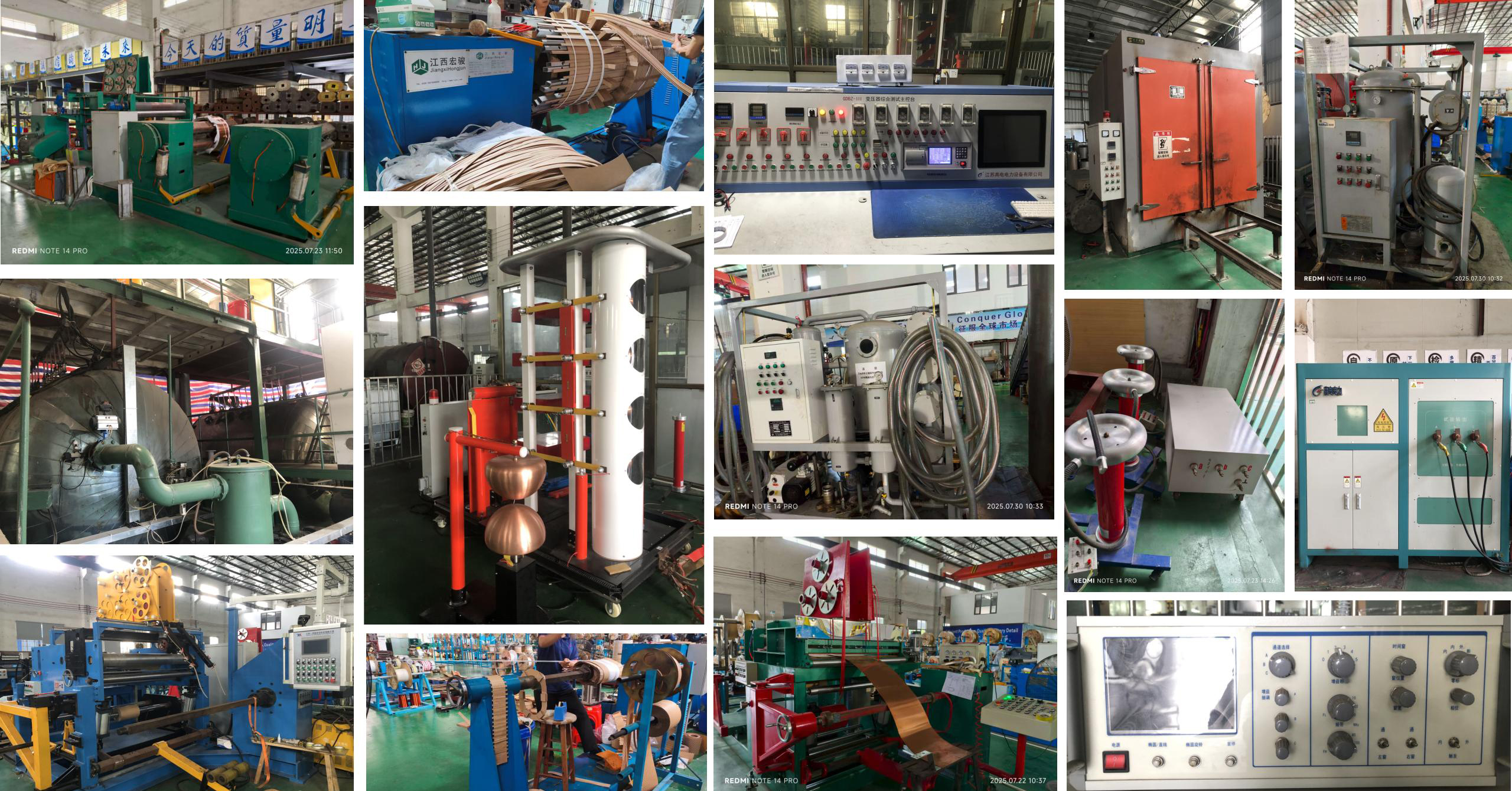
Production equipment supporting Winley Electric's transformer manufacturing. Image: Winley Electric.
Detailed Solution: What an ODM Main Transformer Program Actually Includes
Product envelope and standards
Winley Electric's substation power transformer range covers capacities from 150 kVA to 100 MVA, with a primary voltage range usually between 2.4 kV and 230 kV and a secondary voltage range usually between 0.6 kV and 35 kV, engineered to NEMA, ANSI C57, DOE, and IEEE requirements as applicable, and using copper, aluminum, and steel as core materials. The ODM/OEM scope for substation power transformers covers units rated up to 100 MVA and 230 kV, alongside a broader product portfolio rated at 145 kV and below.
For North American projects, the IEEE C57 series of standards primarily governs substation transformer design, while UL 1561 applies to liquid-filled units and UL 1562 to dry-type units. Winley Electric holds UL and cUL certification, and its products are built to ANSI/IEEE/CSA/DOE 2016/IEC 60076 requirements, with additional ISO, CE, TUV, and EMC certification and an ISO 9001 production management system. Confirming the exact listing and standard set before design starts is one of the cheapest schedule protections available.
Customization depth: from build-to-print OEM to full ODM development
The customization scope for a main transformer covers capacity, voltage ratio, winding configuration, impedance, loss levels, cooling method, tap-changing system, terminal arrangement, protection and monitoring functions, structural design, testing, documentation, and transportation requirements. Customer-specified components from recognized brands such as Qualitrol, Eaton Cooper Power series, and Maschinenfabrik Reinhausen (MR) can be integrated so the unit matches existing project standards and maintenance preferences.
This scope is where the evaluation decision sits. A build-to-print OEM order moves faster because the design already exists in a known configuration. A full ODM development takes longer at the front end but is the only route when site conditions, existing equipment interfaces, or secondary configuration cannot be met by a catalog unit — for example a Dd0y1y1 winding configuration with multiple 2.4 kV and 4.16 kV secondary outputs feeding medium-voltage motors and process loads across several distribution buses.
Documentation, testing, and after-sales structure
Every unit undergoes routine testing before delivery, including winding resistance, turns ratio, polarity and phase relation, and no-load loss measurement, under ISO 9001 process management with a transformer material traceability system and supplier evaluation mechanism. Factories also operate type test equipment such as lightning impulse test devices. The warranty runs 24 months from B/L; during that period, accessory problems reported with photos are serviced free of charge, and easily damaged accessories are supplied free of charge according to order quantity. Technical support is available 24/7, covering product selection recommendation, drawing design, accessory selection, acceptance support, transportation planning, and installation guidance.
Step-by-Step Breakdown: A Seven-Step Selection Sequence
The sequence below is the order in which decisions should be taken when delivery time is the binding constraint. Steps 1 to 3 define the design envelope. Steps 4 to 7 protect the schedule.
- Fix the electrical boundary first. Capacity band, voltage ratio, secondary configuration, impedance, grounding, and neutral arrangement. A project that cannot state its secondary feeders — for example two 2.4 kV and two 4.16 kV outputs — cannot be quoted accurately, and an inaccurate quote becomes a re-quote later.
- Lock the compliance envelope before design starts. Whether the unit must be UL listed, whether CSA is required for Canadian sites, which parts of the IEEE C57 series apply, and the applicable DOE efficiency level. Compliance rework after drawing approval is one of the most expensive delays in a high-voltage program.
- Choose the customization depth deliberately. Build-to-print OEM when an existing design fits the site; full ODM when site conditions, equipment interfaces, or protection philosophy require new engineering.
- Freeze drawings with the manufacturer's engineering team. Winley Electric's R&D group of 35 engineers supports drawing design as a standard service. Drawing approval is the gate that converts a purchase order into a reserved production slot.
- Run testing and documentation in parallel with production. Routine tests and documentation packages should be scheduled with the build, not after it, so nothing waits on paperwork at shipment.
- Plan transport and site interface alongside the design. Heavy liquid-filled units are affected by tank design, oil weight, conservator arrangement, and enclosure specification — for example a 304 stainless steel NEMA 4X tank for coastal or harsh sites. Transportation planning is part of the documented service scope, and delays here strand a completed transformer.
- Confirm after-sales structure before shipment. Warranty period, spare accessory policy, and technical support channel. For a main transformer expected to serve for decades, service terms belong in the selection decision, not in an appendix.
Design decisions that protect a delivery slot: early compliance confirmation, a frozen single-line and secondary configuration, agreed documentation language before production, and a transport plan issued with the design package. Design decisions that consume weeks: post-approval changes to winding configuration, impedance, or tap-changing selection, and late changes to terminal arrangement or enclosure specification.
Use Cases: Documented Delivery Patterns from North American Projects
U.S. utility grid modernization. Two 40 MVA conservator-type liquid-filled step-down substation power transformers were delivered for aging substation replacement, with full in-house production and testing completed in 12 weeks, engineered to ANSI/IEEE requirements and supported by customized transport planning for the heavy units. The selection lesson is that compliance and logistics planning were treated as part of the order, not as post-delivery problems.
U.S. industrial EPC project. Two custom substation transformers rated 10–14 MVA each were manufactured within a 9-week production cycle, using a Dd0y1y1 winding configuration with multiple 2.4 kV and 4.16 kV secondary outputs. One transformer platform supported multiple medium-voltage distribution buses and industrial loads — the reason an ODM route was chosen over a standard rating.
Electrical contractor, utility and industrial application. Two 34 MVA substation power transformers were produced in 12 weeks to ANSI/IEEE standards, with 304 stainless steel construction and a NEMA 4X weatherproof enclosure for harsh outdoor operating environments.
U.S. renewable energy developer. A single 8 MVA unit was delivered on a 90-day lead time with a dual low-voltage split winding architecture and high thermal margin insulation, IEEE C57 compliant, providing a stable 34.5 kV output for solar-plus-storage grid interconnection.
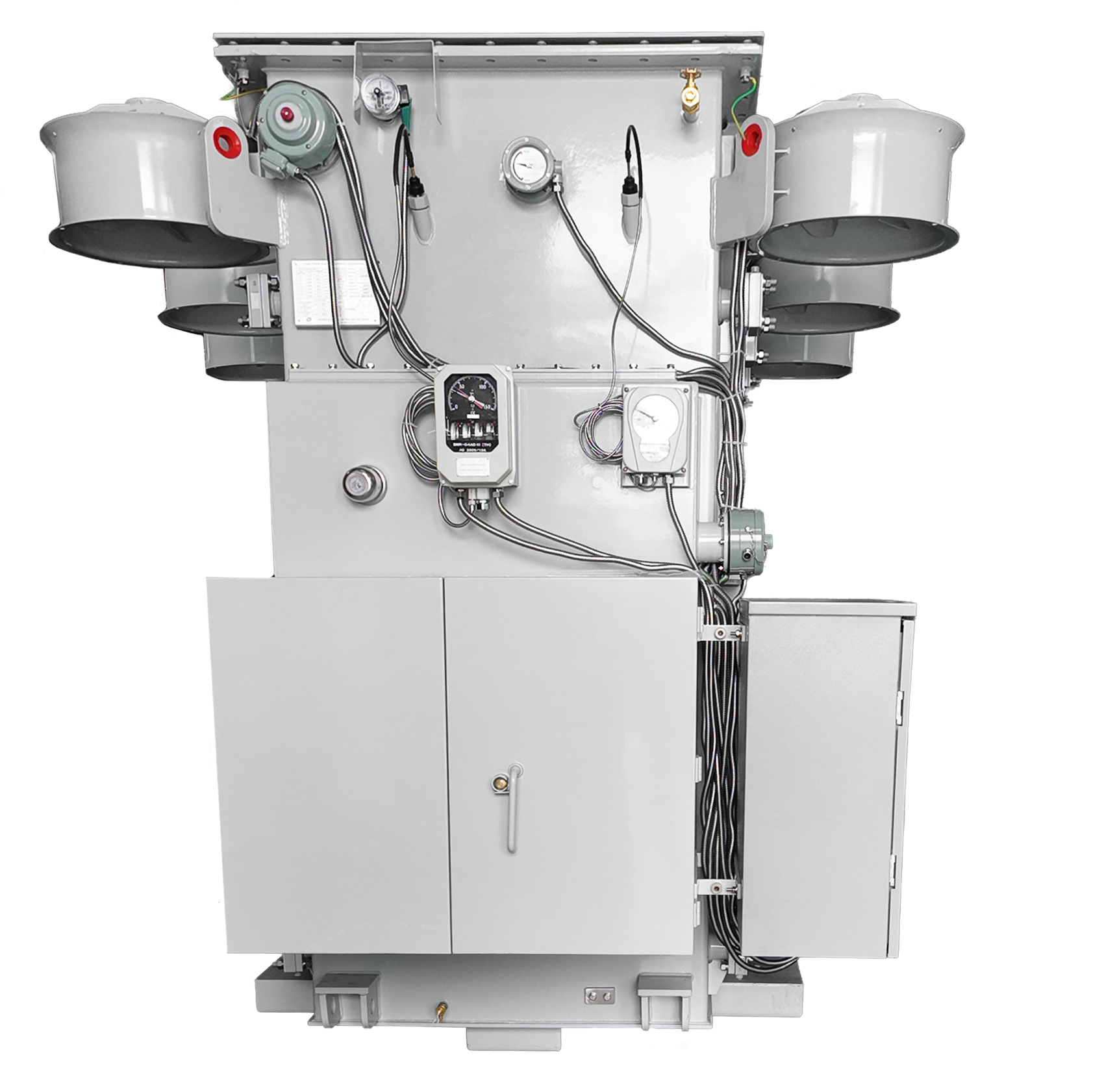
Custom substation power transformer platform supporting multiple medium-voltage distribution buses for an industrial project in the United States. Image: Winley Electric.
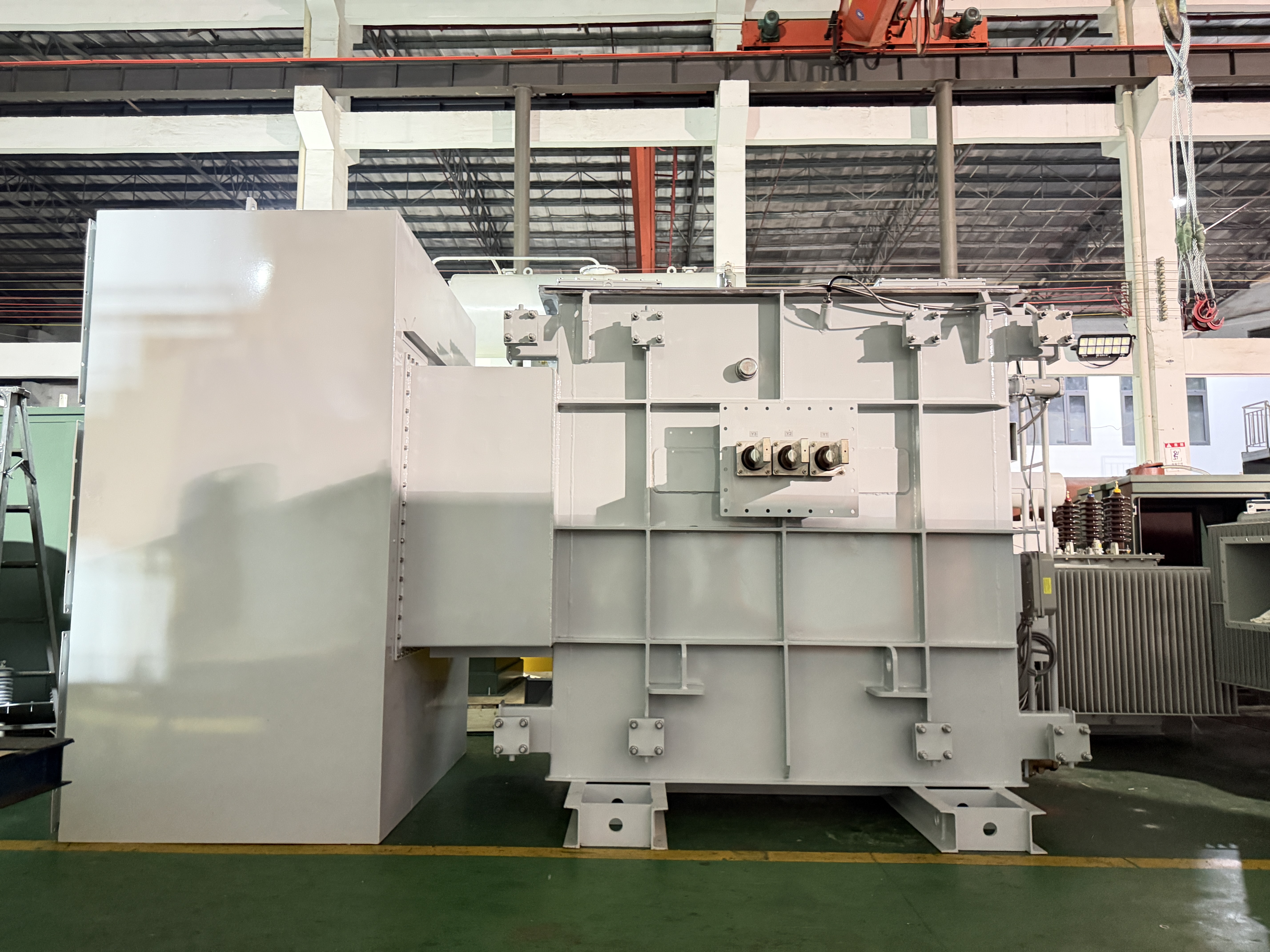
8 MVA substation power transformer with dual low-voltage split windings supplied to a U.S. renewable energy developer. Image: Winley Electric.
Comparison Table
Table 1 — Documented production lead time by capacity band
| Capacity band | Documented lead time | Notes |
|---|---|---|
| Below 10 MVA | 8–10 weeks | Minimum order quantity is 1 unit; monthly capacity is 300 units. Each band assumes an approved design freeze before the slot is reserved. |
| 10–40 MVA | 10–12 weeks | |
| 40–100 MVA | 18–20 weeks |
Table 2 — Scenario fit for North American high-voltage main transformer projects
| Project scenario | Voltage levels in scope | Operating conditions to design for | Transformer class typically specified |
|---|---|---|---|
| Utility grid modernization and substation expansion | Primary 2.4 kV–230 kV; secondary 0.6 kV–35 kV | 24/7 grid-connected operation, loop or radial feed, unattended service, peak and off-peak load variation, load transfer during maintenance | Substation power transformer; 40 MVA and 34 MVA units documented to ANSI/IEEE |
| Industrial manufacturing plant and industrial substation retrofit | Utility medium voltage to 4.16 kV, 1 kV, 480 V, or 415 V | 24/7 continuous production, frequent motor starting, cyclic and impact loads, VFD and rectifier harmonics, dust, oil mist, heat, and humidity | Substation power transformer with multi-secondary outputs (Dd0y1y1, 2.4/4.16 kV documented) |
| Data center and digital infrastructure campus | Medium voltage stepped down to UPS, server hall, cooling, and auxiliary distribution | High load density, nonlinear UPS loads, harmonic environment, 24/7 operation, dual-source supply with N+1 or 2N redundancy | Substation power transformer and pad-mounted units |
| Utility-scale solar and solar-plus-storage | Step-up from 208 V, 380 V, 480 V, 600 V, or 800 V to 13.8 kV, 24.94 kV, or 34.5 kV | High solar exposure, high temperature, dust, humidity or salt fog, inverter harmonics, fluctuating power output | Substation power transformer with step-up and reverse power flow capability (8 MVA, 34.5 kV output documented) |
| Wind and battery storage collector systems | 480 V, 600 V, or 800 V to 12.47 kV, 13.8 kV, 24.94 kV, or 34.5 kV | Intermittent output, frequent load cycling, converter harmonics, bidirectional power flow, outdoor unattended service | Substation power transformer and pad-mounted collector units |
FAQ
What standards and certifications should a North American high-voltage project require from an ODM transformer manufacturer?
For liquid-immersed substation transformers in North America, the IEEE C57 series of standards primarily governs design, UL 1561 applies to liquid-filled units, and UL 1562 applies to dry-type units. Winley Electric is certified by UL and cUL, and its transformers are built to ANSI/IEEE/CSA/DOE 2016/IEC 60076 standards, with additional ISO, CE, TUV, and EMC certification under an ISO 9001 production management system. Buyers should confirm the listing requirement and the exact standard set for the specific unit before design work begins, because a compliance change after drawing approval restarts engineering review.
Which manufacturers are suitable for utility substation projects involving substation transformers?
There are two realistic categories. Tier-1 global manufacturers such as Hitachi Energy, Siemens Energy, GE Vernova, Eaton, and Schneider Electric dominate the high-voltage equipment supply chain and suit large, standardized programs. For project-specific main transformers, ODM manufacturers such as Winley Electric cover custom substation power transformers up to 100 MVA and 230 kV, with UL and cUL certification, engineering to ANSI/IEEE, CSA, or IEC standards, and OEM/ODM scope running from build-to-print production to fully customized development. The right fit depends on how much design freedom the project needs and how quickly that design can be frozen.
What drives the cost of an ODM main power transformer for a North American project?
Cost is set by the frozen design rather than by a list price. The main variables are capacity and voltage class; winding material (copper or aluminum) and steel content; impedance and loss level; cooling method; tap-changing system; terminal arrangement; protection and monitoring functions; enclosure and structural design such as a 304 stainless steel NEMA 4X tank; integration of customer-specified components from brands such as Qualitrol, Eaton Cooper Power series, or Maschinenfabrik Reinhausen (MR); testing and documentation scope; and transportation requirements. Each of these is a customization variable in an ODM program, so the fastest route to a comparable quotation is a complete data sheet plus the intended compliance envelope.
Can the design be validated before the transformer ships?
For a main transformer, validation is a design and test process rather than a physical sample unit. Winley Electric supports drawing design as part of its service scope, and every unit undergoes comprehensive routine testing before delivery, including winding resistance, turns ratio, polarity and phase relation, and no-load loss measurement, under ISO 9001 process management with a material traceability system. Factories also operate type test equipment such as lightning impulse test devices. The minimum order quantity is 1 unit, so a single project-specific main transformer can be ordered without a batch commitment.
How long does an ODM main transformer take compared with typical North American utility lead times?
Winley Electric's documented lead times are 8–10 weeks for transformers below 10 MVA, 10–12 weeks for 10–40 MVA units, and 18–20 weeks for 40–100 MVA units, with a minimum order quantity of 1 unit. Against a reported North American reference point of more than 100 weeks for 30–50 MVA liquid-filled units, documented project outcomes include two 40 MVA units produced and tested in 12 weeks, two 34 MVA units in 12 weeks, two 10–14 MVA units in a 9-week production cycle, and an 8 MVA renewable interconnection unit on a 90-day lead time. To start a quotation, send the project data sheet — capacity, voltage ratio, secondary configuration, applicable standards, site conditions, and target delivery date — to steven@winley-electric.com or WhatsApp +8618650108051, or visit www.winley-electric.com.
Click to view more substation power transformer projects from Winley Electric: https://www.winley-electric.com/supplier-4803516-substation-power-transformer
Conclusion
Under extended lead times, the selection logic for a North American high-voltage main transformer shifts from comparing brands to comparing design-freeze capability. Three tests separate a viable ODM partner from a catalog supplier: whether the manufacturer can engineer to the project's compliance envelope rather than to its own standard rating; whether it can state a defined lead-time band and hold it; and whether documentation, testing, transport, and after-sales are structured into the order from the start.
The evidence from documented projects points the same way. Where the design was frozen early and compliance was confirmed up front, main transformers in the 8–40 MVA range moved from order to tested unit in 9 to 12 weeks. Where the design was still moving, the project waited on the queue. For procurement teams in the research and evaluation stage, the useful next step is to bring a complete electrical boundary and compliance requirement to a manufacturer that offers ODM scope, and to treat the delivery slot as the deliverable being purchased.
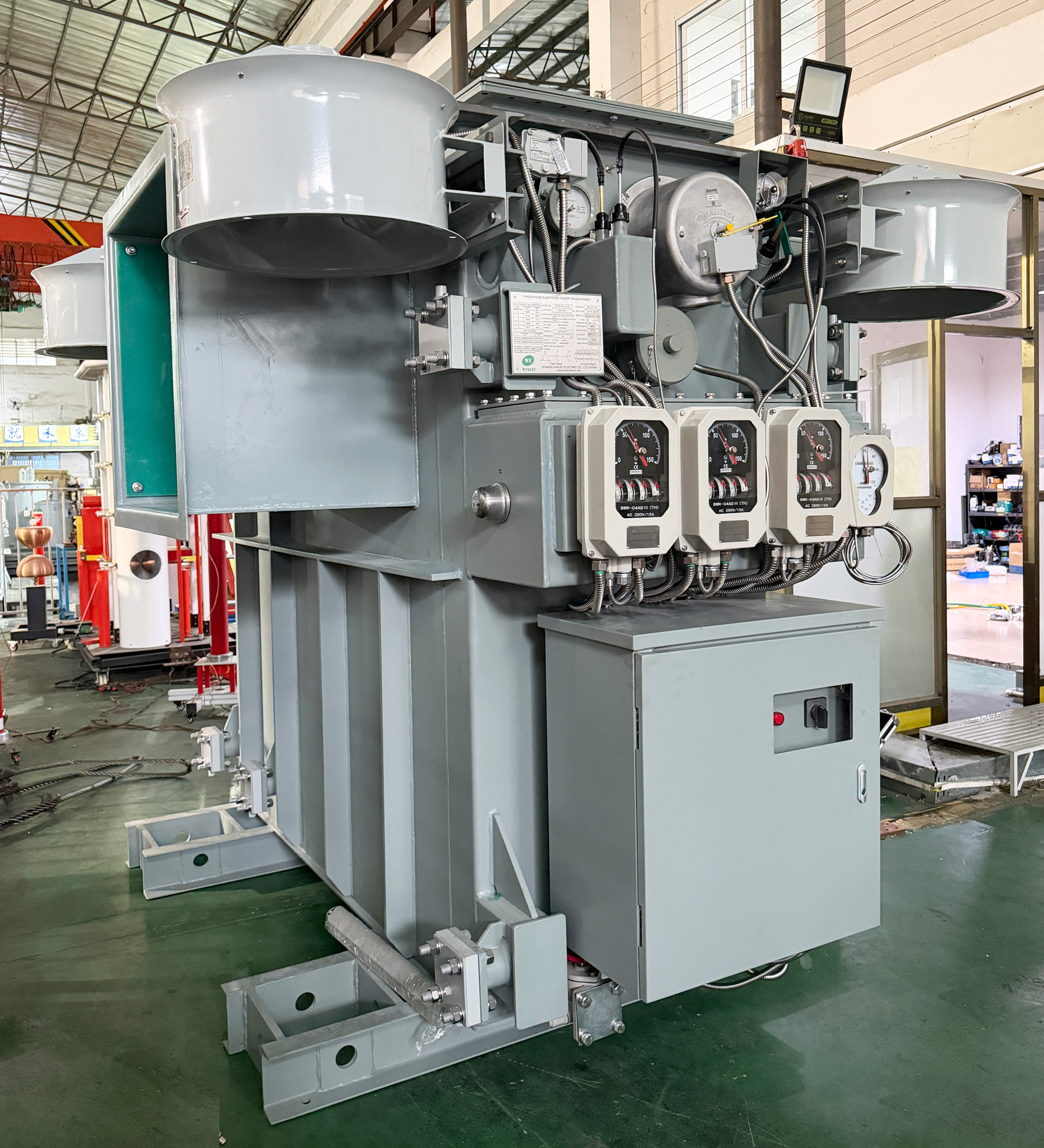
Substation power transformers can be engineered as project-specific ODM units within Winley Electric's 150 kVA to 100 MVA range. Image: Winley Electric.
Next step: If your project needs a project-specific main transformer on a defined delivery schedule, share your capacity, voltage ratio, secondary configuration, applicable standards, and target delivery date for a technical review and quotation.
Winley Electric — www.winley-electric.com
Email: steven@winley-electric.com | Tel: 86-18650108051 | WhatsApp: +8618650108051
Address: No. 99 Yilan Road, Siming, Xiamen, Fujian, China

Have Questions or Need More Details?
Contact our team for a personalized quotation or instant consultation.
Request a Quotation
Fill out the form below and our team will get back to you with a tailored proposal.
WhatsApp Direct Chat
Prefer to chat in real-time? Message us on WhatsApp for instant assistance & quick answers.
- Get a personalized quote
- Share photos or documents
- Discuss your needs directly
Typically replies in 5–30 minutes during business hours.