Corrosion, Feeder Shortfall and Voltage Mismatch: How ODM Pad Mounted Transformers Solve Three Outdoor Problems on North American Campus Projects
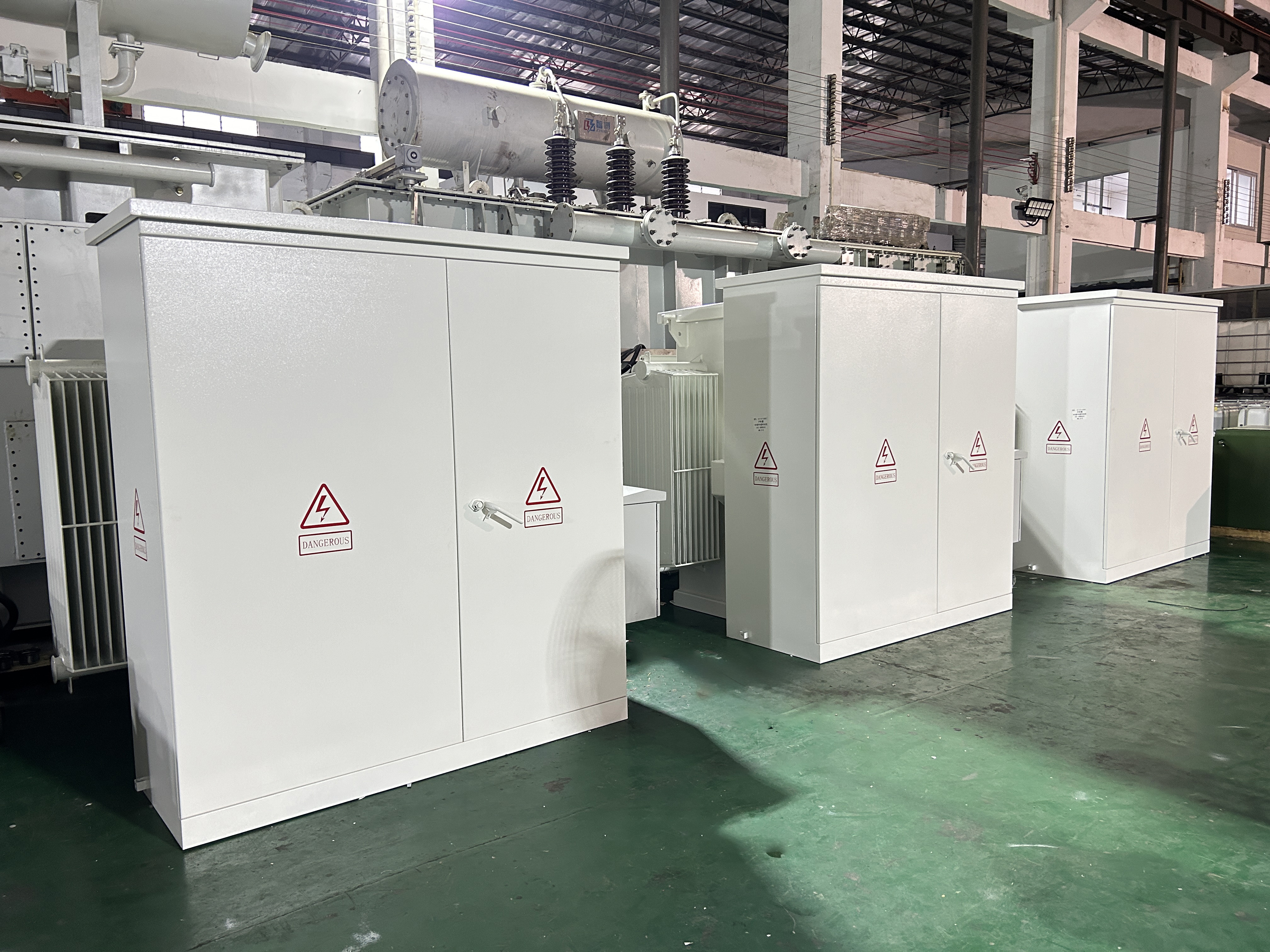
Three problems account for most of the field rework on outdoor pad mounted transformer projects in North America: enclosure corrosion, feeder coordination shortfalls, and primary-to-secondary voltage mismatch. None of them appears on a catalog specification sheet, because a catalog describes a generic installation while an outdoor campus is a specific one — with its own corrosion exposure, feeder headroom and utility voltage class.
ODM — original design manufacturing — exists to close that gap. In an ODM pad mounted transformer program, the enclosure, the circuit and the protection scheme are engineered against real site data and approved on a drawing before the first unit is built. The output is not a "better" transformer in the abstract; it is a transformer matched to the feeder it will be connected to and to the environment it will sit in for the next twenty years.
Winley Electric (Xiamen Winley Electric Co., Ltd.), founded in 2014, is a UL- and cUL-certified transformer manufacturer headquartered in Xiamen, China, with manufacturing facilities in Shanghai and Guangdong. The company produces transformers rated 145 kV and below — including three-phase and single-phase pad mounted transformers — and exports roughly 70% of its output, primarily to North and South America.
This article examines why corrosion, feeder and voltage problems recur on North American outdoor projects, uses a campus-scale project profile to show how the three symptoms interact, and sets out the ODM design logic — enclosure, circuit, protection — that removes them at the drawing stage rather than in the field.
Problem Definition: Why the Same Three Failures Keep Reappearing Outdoors
Almost every pad mounted transformer problem that survives commissioning falls into one of three categories.
- Enclosure survival. The unit sits outdoors, often on a pad that the public can walk up to, exposed to freeze-thaw cycling, coastal salt, road salt, snow-melt and standing water. A coating system and enclosure detailing that were adequate for a covered installation are not necessarily adequate for a coastal campus pad.
- Feeder coordination. The transformer's kilovolt-ampere rating, losses and impedance may be individually acceptable and still fail to coordinate with the feeder's available capacity and with upstream protection. The visible symptoms are nuisance tripping, voltage sag, or a unit that runs hot at part load — not an obviously "undersized" nameplate.
- Voltage mismatch. North American distribution uses several primary classes and several secondary configurations. A unit built for one class cannot be field-adapted to another, and the mismatch typically surfaces only when the utility energizes the circuit.
The root cause is identical in all three cases: the specification was written for a generic site, and the site is not generic. Enclosure problems, feeder problems and voltage problems are specification problems, and specification problems are far cheaper to solve on a drawing than on a pad.
Industry Background: The Standards That Define the Envelope
Three IEEE standards frame what a compliant North American outdoor unit must be, and each one maps onto one of the symptoms above.
- IEEE C57.12.34 governs three-phase pad-mounted distribution transformers, covering ratings up to 10 MVA and 34.5 kV (IEEE SA). This is the design envelope for the three-phase units used in campus, commercial and industrial distribution.
- IEEE C57.12.28-2023 specifies enclosure integrity requirements for pad-mounted equipment, specifically so that equipment placed in public-access areas remains safe (IEEE Xplore). This is the standard behind the corrosion and tamper-resistance conversation.
- IEEE C57.12.38-2025 standardizes single-phase pad-mounted transformers of 250 kVA and smaller — the class that serves residential districts and lighter commercial loads.
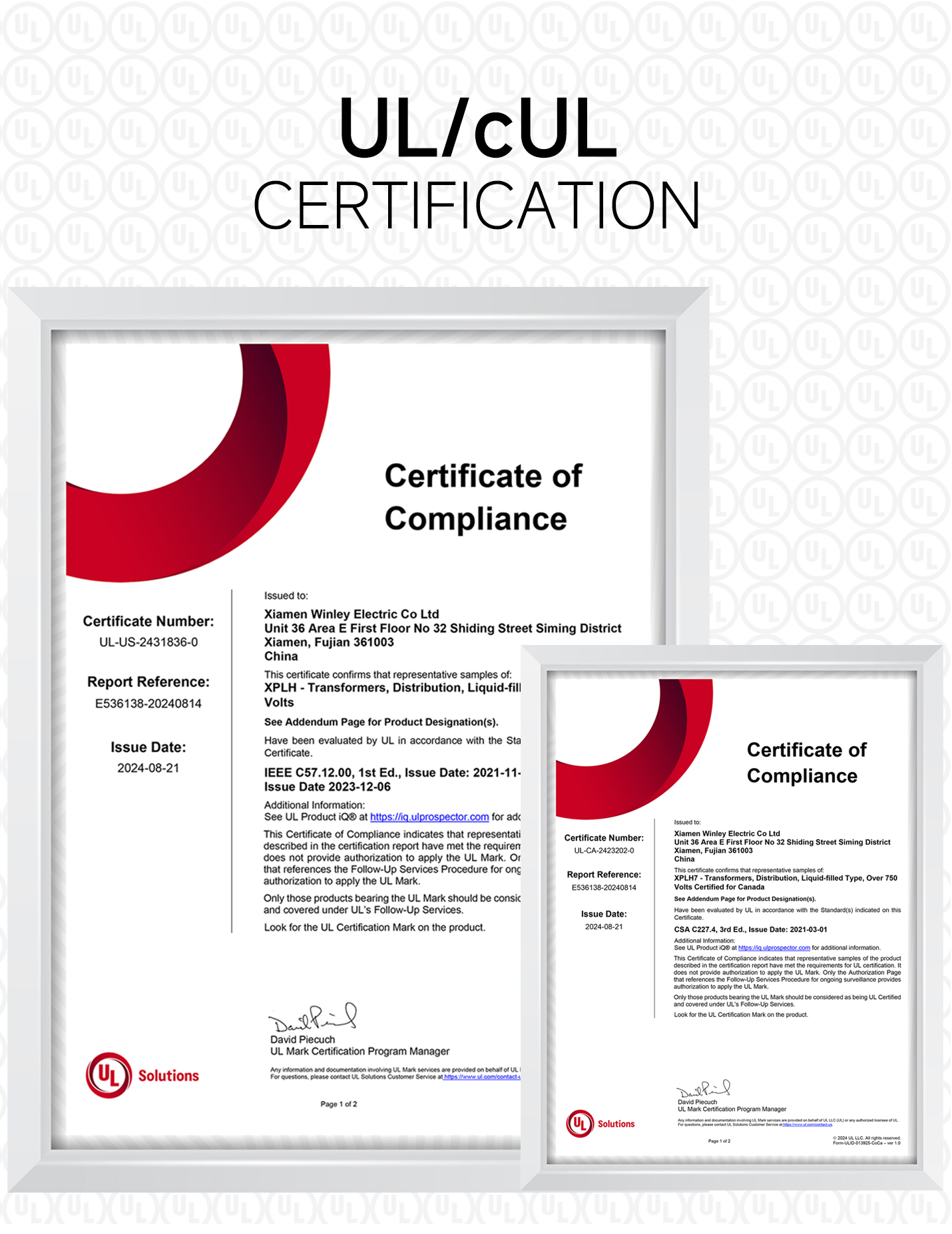
Buyers then layer commercial requirements on top of these design standards. UL and cUL listing is the practical market-access requirement for equipment installed in the United States and Canada, and efficiency compliance for this market is set by DOE 2016. Winley Electric's pad-mounted transformers are UL and cUL certified under UL File No. E536138 and are designed to comply with ANSI/IEEE, CSA, DOE and NEMA requirements.
The market context explains why these decisions now carry more weight. The global pad mounted transformer market was valued at approximately USD 22.3 billion in 2024 (Global Market Insights), while the U.S. market alone was estimated at USD 3.75 billion in 2024, driven by grid modernization and underground cabling (Market Research Future). Trade data points the same way: global trade in liquid dielectric transformers under 650 kVA reached USD 4.08 billion in 2024, a 22.6% increase over the previous year, with China alone exporting USD 511 million (Observatory of Economic Complexity / World Bank WITS).
Published estimates diverge — Mordor Intelligence sizes the same market at USD 6.12 billion for 2025 and Strategic Market Research at USD 5.2 billion for 2024 — because analysts scope the category differently. The directional signal matters more than any single figure: demand is rising, and underground pad-mounted distribution is where a growing share of it lands.
The Campus Case: Three Symptoms, One Project
The project profile below reflects how these problems present on North American campus-type sites — multi-building developments with underground primary distribution and mixed loads. Winley Electric supplies pad-mounted transformers into precisely this environment, including municipal underground grids, residential districts, commercial malls, hospitals, universities, factories, data centers, solar and wind storage farms, EV charging stations, and transport hubs.
What makes campus projects difficult is that the three symptoms arrive together rather than one at a time.
Symptom one — the enclosure ages faster than the asset. On a campus pad exposed to winter salt and meltwater, corrosion appears at seams, bases and hardware within the first years of service, long before the electrical life of the unit is anywhere near exhausted. Because these units sit in public-access areas, the enclosure is not only a durability question; IEEE C57.12.28-2023 exists to keep that equipment safe where people can reach it.
Symptom two — the feeder runs out of headroom. Campus load grows in steps: a new building, a new charging area, a new cooling plant. When the transformer's loss profile and impedance were chosen without reference to the feeder's real capacity, the first symptoms are thermal and protective rather than obvious. Most domestic manufacturers in China follow IEC energy efficiency standards, while Winley Electric's products meet DOE 2016 efficiency requirements — a difference that shows up directly in losses, and therefore in how much feeder capacity is actually available for load.
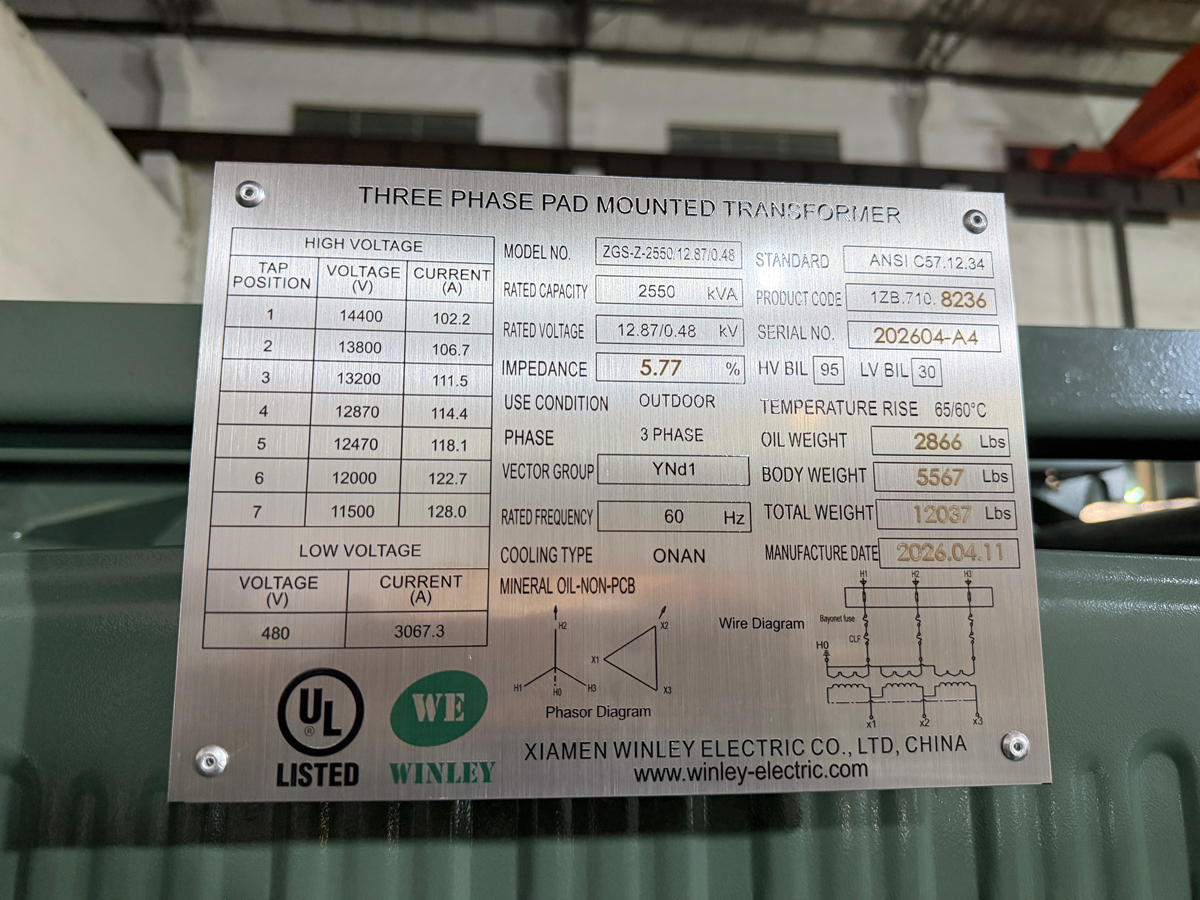
Symptom three — the nameplate does not match the system. North American primary classes in this segment include 12,470 V delta, 13,800 V and 34,500 V, with secondaries at 480Y/277 V, 208 V or 4,160Y/2,400 V depending on the load profile. Winley Electric's pad-mounted range covers configurations such as a 150 kVA three-phase unit with a 12,470 V delta primary and 480Y/277 V secondary, a 1,500 kVA unit at 34.5 kV to 480Y/277 V, a 2,000 kVA unit at 12.47 kV, and a 5 MVA unit taking 13,800 V down to 4,160Y/2,400 V. When the ordering assumption was "13.8 kV class" and the utility energizes a 12.47 kV delta system, no amount of field adjustment fixes it.
In all three cases, the least expensive correction point is the drawing.
The ODM Fix: Enclosure, Circuit and Protection Engineered Together
ODM customization is often described as a list of "options." That framing understates what actually happens. In a properly run ODM program, three design domains are resolved against the same site data set, and they are resolved before manufacturing begins.
Enclosure: Matching Integrity and Finish to the Exposure
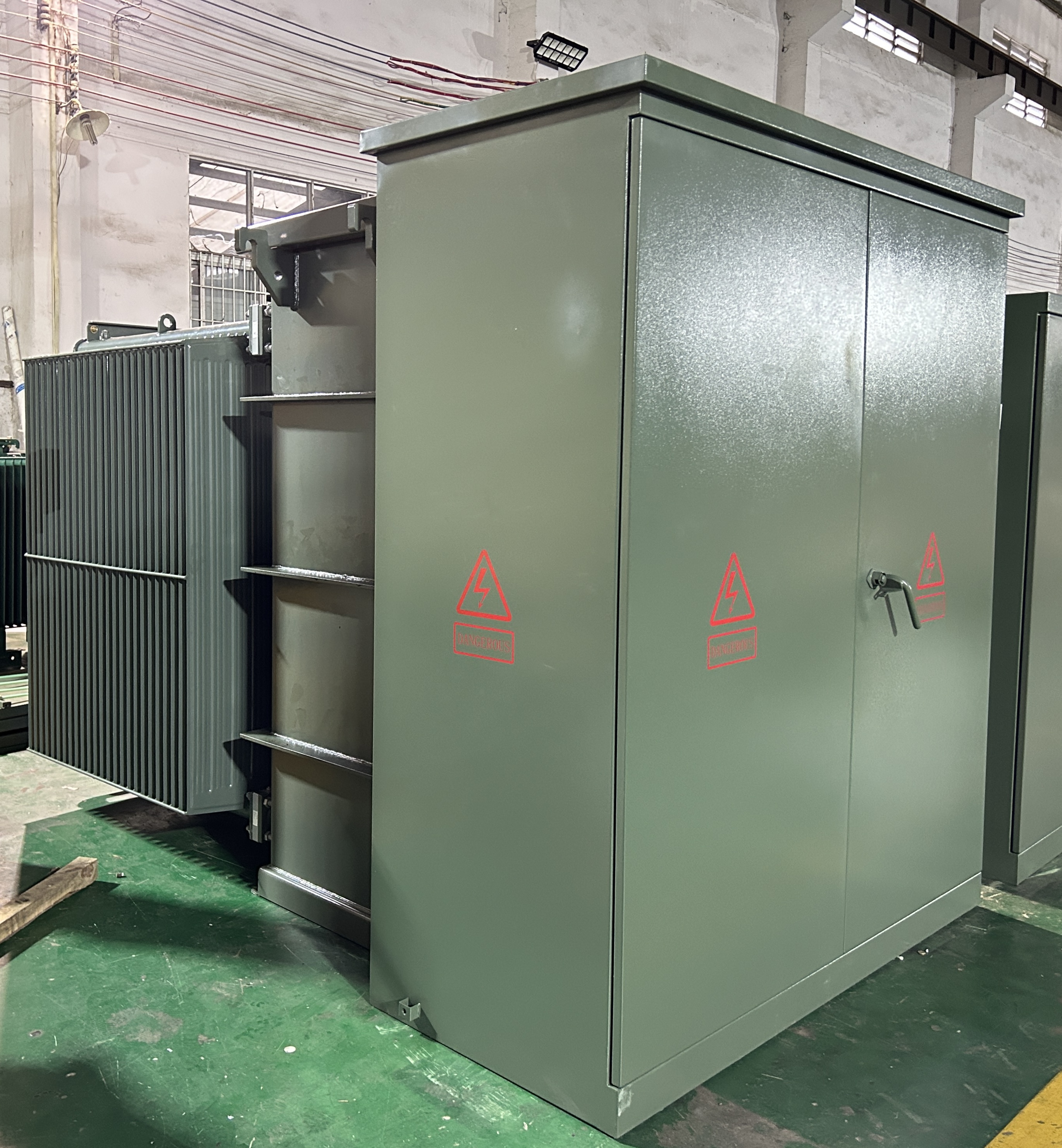
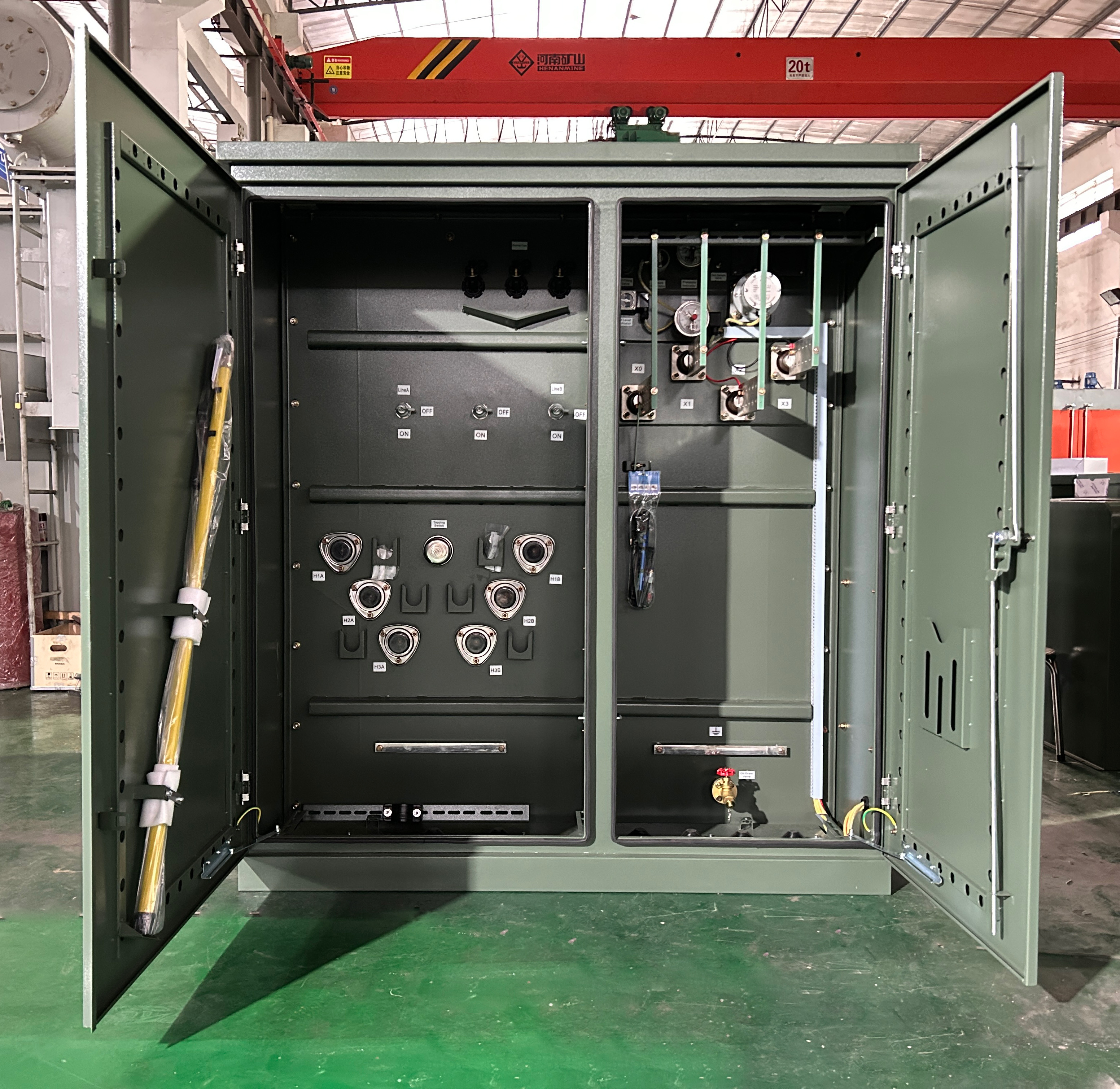
The enclosure decision starts with a question no catalog can answer: what will this pad look like in year eight? Coastal and snow-belt campuses, industrial sites with chemical exposure, and inland commercial pads need different enclosure specifications. The relevant requirements — enclosure integrity for public-access areas under IEEE C57.12.28-2023, correct pad and clearance design, and corrosion protection appropriate to the local environment — are set at the drawing stage and confirmed with the buyer before release.
There is a limit worth stating plainly: enclosure customization cannot compensate for a badly designed pad or for drainage that keeps the base in standing water. The most durable specification in the world will not fix a site with nowhere for meltwater to go. Enclosure design and civil design have to be resolved together, and a supplier that does not ask about the pad is not really doing ODM work.
Circuit: Matching the Unit to the Feeder It Will Actually Feed
Feeder shortfalls are rarely solved by moving one kVA step up. The more useful exercise is to treat the feeder and the transformer as one circuit: available feeder capacity, the load's growth trajectory, the unit's loss profile under the applicable efficiency regime, impedance, and protection coordination.
This is where the efficiency standard becomes a commercial issue rather than a compliance checkbox. Most domestic Chinese manufacturers follow IEC energy efficiency levels, while Winley Electric's products are built to meet DOE 2016 requirements. Lower losses leave more of the feeder's capacity available to serve load — which matters on a campus where the feeder is fixed and the load is not.
Winley Electric's production base supports circuit-level engineering because the critical steps are in-house: silicon steel sheet slitting lines and cross-cutting lines, multi-model foil winding machines and wire winding machines, vacuum constant-temperature drying ovens, two-stage vacuum oil filters, and automated welding equipment. The company holds more than 20 independent R&D patents and employs 35 engineers proficient in the transformer standards of multiple markets, including ANSI, IEEE, CSA, DOE 2016, NEMA and IEC.
Voltage and Protection: Closing the Mismatch Before Manufacturing
Voltage matching is a data-collection discipline. The primary class, the secondary configuration, whether the service is single-phase or three-phase, and the protection and accessory set are confirmed against utility interconnection data before drawings are released. Winley Electric's customization scope covers exactly these decisions — product selection recommendation, drawing design, accessory selection, acceptance support, transportation planning, and installation guidance.
Because the company holds valid UL and cUL listings under UL File No. E536138, a correctly specified unit can be installed across the United States and Canada without a separate listing process, and the same listing applies to both three-phase and single-phase pad-mounted types.
| Field symptom | Governing requirement | ODM design response |
|---|---|---|
| Enclosure corrosion and integrity loss on public-access pads | IEEE C57.12.28-2023 enclosure integrity for pad-mounted equipment | Enclosure and corrosion protection specified against site exposure; pad, clearance and integrity requirements confirmed at drawing stage |
| Feeder coordination shortfall; unit runs hot at part load | DOE 2016 energy efficiency requirements; feeder capacity and protection coordination | Loss profile, kVA selection and impedance reviewed against the feeder's real conditions before release to production |
| Primary/secondary voltage mismatch discovered at energization | IEEE C57.12.34 (three-phase, up to 10 MVA / 34.5 kV); IEEE C57.12.38-2025 (single-phase, 250 kVA and smaller) | Primary class, secondary configuration and protection set locked at drawing approval |
| Market-access compliance before installation | UL/cUL listing; ANSI/IEEE, CSA, DOE and NEMA alignment | UL/cUL certification under UL File No. E536138 |
Step-by-Step: How an ODM Order Runs From Site Data to Energization
- Site data intake. Primary voltage class, available feeder capacity, load profile and growth plan, service type, and corrosion exposure. This is the step in which a catalog purchase has already made its assumptions.
- Selection recommendation. Winley Electric's engineering team proposes kVA rating, voltage pairing and efficiency class against the site data rather than against a stock list.
- Drawing design and approval. Enclosure, circuit and protection are drawn and reviewed with the buyer. Nothing is released to production until the drawing is confirmed.
- Accessory selection. Protection and accessory items are finalized alongside the drawing package.
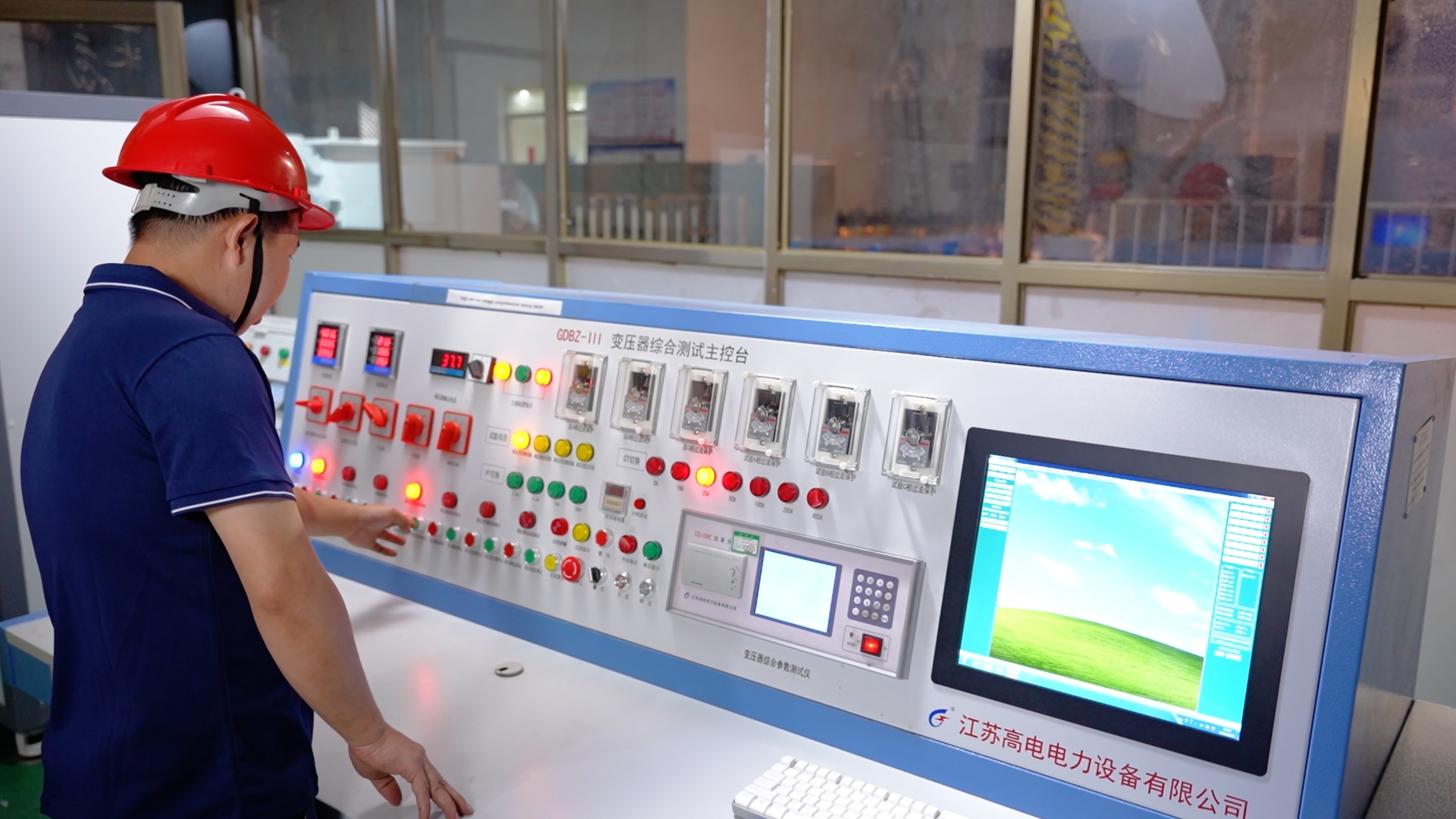
- Hold-point manufacturing. Mandatory stop points are built into the manufacturing process — typically set after irreversible processes or before critical performance tests. At each hold point, authorized quality control personnel must inspect and sign off before work continues.
- Factory testing. Alongside conventional testing equipment, the factories operate professional type test equipment such as lightning impulse test devices, and all products undergo strict factory inspection in accordance with standard specifications before leaving the factory. A transformer material traceability system and a supplier evaluation mechanism run across the entire production process.
- Acceptance support. Documentation and support for customer acceptance testing.
- Transport, installation and after-sales. Transportation planning and installation guidance are provided, backed by 24/7 technical support and a 2-year free maintenance service.
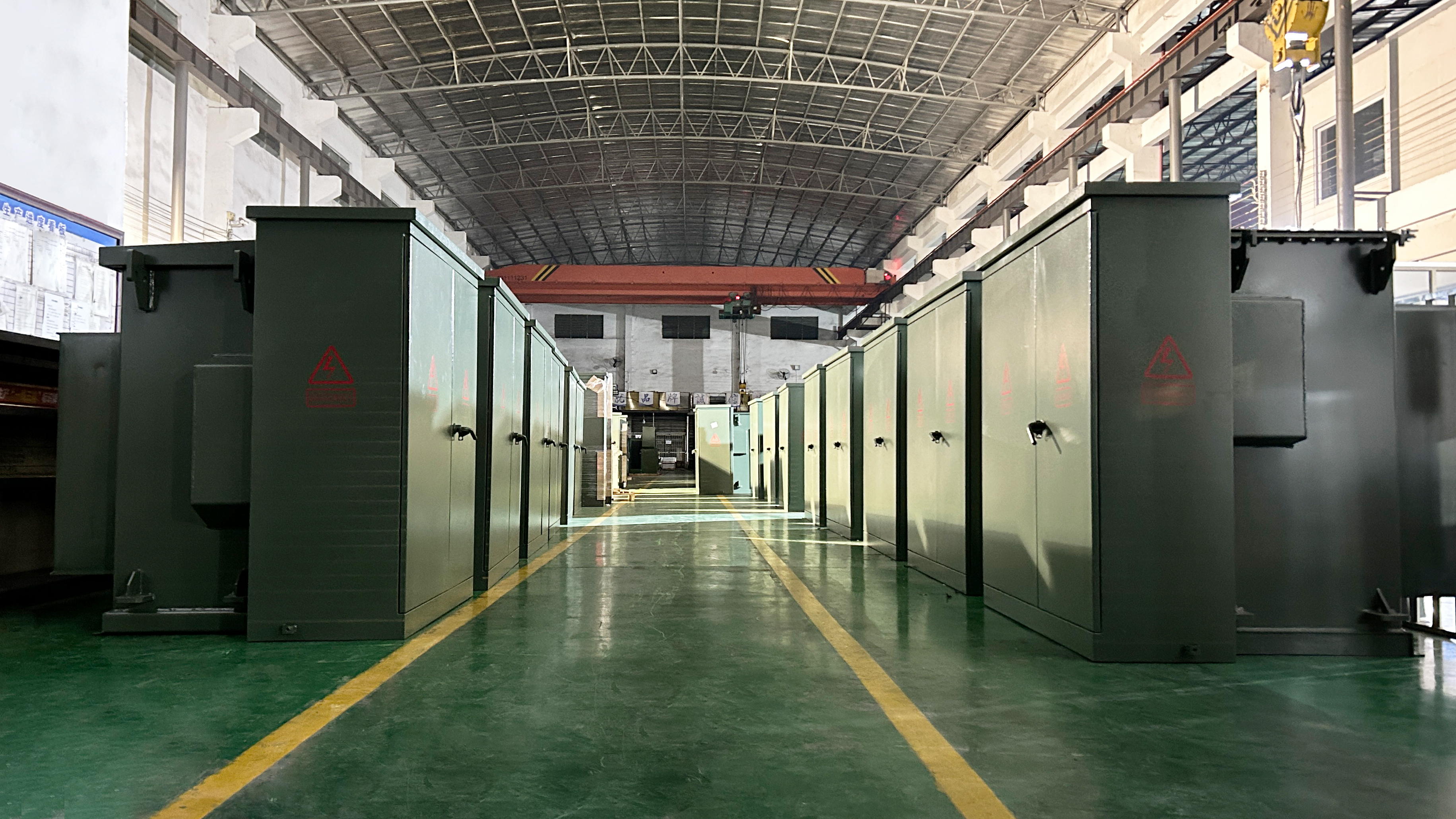
Two facts about capacity make this workflow predictable rather than aspirational: the manufacturing base covers 45,000 m² with 220 employees and an annual output of 35,000 units, and 80% of front-line staff have more than three years of working experience while 50% have more than five.
Where These Three Problems Hit Hardest: Application Profiles
The three symptoms do not weigh equally across applications. Winley Electric's pad-mounted transformers are supplied into a defined set of North American applications, and each one stresses a different part of the specification.
- Solar and wind storage farms: voltage class and loss performance dominate; feeder capacity is shared across many units, so efficiency compliance compounds across the site.
- EV charging stations: load growth is the defining risk — a charging site specified around today's demand is often under-specified within a short period.
- Municipal underground grids: enclosure integrity and public-access safety move to the front, which is exactly where IEEE C57.12.28-2023 applies.
- Residential districts: single-phase units of 250 kVA and smaller under IEEE C57.12.38-2025, where voltage pairing and enclosure appearance both matter.
- Commercial malls, hospitals, universities and factories: classic campus conditions — mixed loads, staged growth, public exposure — with all three symptoms present at once.
- Data centers: the feeder headroom question is sharpest here, because load is dense and tolerance for voltage deviation is low.
- Transport hubs: outdoor exposure combined with continuous duty cycles.
Comparison: Three Sourcing Paths for a North American Outdoor Unit
Once the technical specification is settled, the commercial decision usually narrows to three paths: a local North American manufacturer, a China-based manufacturer with North American certifications and pad-mount project experience, or the broader field of domestic manufacturers whose efficiency design basis and pad-mount track record vary. The table below compares them on the criteria that actually decide outdoor projects. Cells marked "verify with supplier" are exactly that — checks a buyer should run at document and file-number level rather than accept at face value.
| Decision criterion | Winley Electric (China, ODM program) | Local North American manufacturer | Most domestic Chinese manufacturers |
|---|---|---|---|
| Lead time | 4–6 weeks | 20–40 weeks | Verify with supplier |
| Total cost position | 20–35% lower total cost than local North American products; about 10% lower than most transformer manufacturers in China | Reference baseline | About 10% above the Winley comparison point |
| Certification | UL/cUL certified under UL File No. E536138; designed to ANSI/IEEE, CSA, DOE and NEMA requirements | Verify with supplier | Verify with supplier |
| Efficiency regime | Meets DOE 2016 energy efficiency requirements | North American efficiency regime | Most follow IEC energy efficiency standards |
| North American pad-mount experience | Extensive experience in pad-mounted transformer projects for the North American market | Local market presence | Verify pad-mount references |
| Customization and MOQ | Enclosure, circuit, protection and accessory customization; flexible MOQ of 1 unit | Verify with supplier | Verify with supplier |
| Quotation and support | Complete inquiries quoted within 1–3 days; 24/7 technical support; 2-year free maintenance | Verify with supplier | Verify with supplier |
| Documented application fit | Fast-deployment North American projects: solar farms, EV charging stations, municipal underground grids, residential districts, commercial malls, hospitals, universities, factories, data centers, wind storage farms, transport hubs | Evaluate against project requirements | Evaluate against project requirements |
For budget planning, two publicly available benchmarks are useful as a sanity check rather than as a quotation. FOB prices for pad-mounted transformers from China were typically in the range of USD 25 to USD 70 per kVA in 2025 depending on materials (CHBEB Transformer Buyer Guide; medium-reliability third-party source, to be verified before use). In the U.S. market, the average list price for a standard-efficiency 500 kVA oil-filled pad-mounted transformer at 13.8 kV to 480 V was approximately USD 39,761 (Meta Power Solutions / industry quotes, 2024; medium-reliability third-party source, to be verified before use). Both figures are indicative only, and both should be replaced with a project-specific quotation before any purchase decision — particularly because the 500 kVA, 13.8 kV to 480 V configuration is one of the most commonly quoted reference points in North America.
Two conclusions follow from the table. First, lead time and total cost are the dimensions on which a China-based certified manufacturer differs most sharply from local production — 4–6 weeks against 20–40 weeks, and 20–35% lower total cost. Second, certification and efficiency regime are the dimensions on which the buyer carries the most risk, because they cannot be verified by inspection after delivery. Those are the two items to check first, at file-number level.
FAQ
What standards should a pad mounted transformer meet for a North American outdoor project?
Three IEEE standards define the design envelope. IEEE C57.12.34 governs three-phase pad-mounted distribution transformers, covering ratings up to 10 MVA and 34.5 kV. IEEE C57.12.28-2023 specifies enclosure integrity requirements for pad-mounted equipment so that it remains safe in public-access areas. IEEE C57.12.38-2025 standardizes single-phase pad-mounted transformers of 250 kVA and smaller. Buyers then add market-access requirements: UL and cUL listing for equipment installed in the United States and Canada, DOE 2016 efficiency compliance, and alignment with ANSI/IEEE and NEMA conventions. Winley Electric's pad-mounted transformers are UL and cUL certified under UL File No. E536138 and are designed to comply with ANSI/IEEE, CSA, DOE and NEMA requirements.
Can an ODM supplier customize the enclosure, circuit and protection instead of shipping a catalog unit?
Yes — customizing those three domains is the definition of ODM. In Winley Electric's case, the customization scope covers product selection recommendation, drawing design, accessory selection, acceptance support, transportation planning and installation guidance. The engineering base for this work is 35 engineers proficient in ANSI, IEEE, CSA, DOE 2016, NEMA and IEC standards, supported by more than 20 independent R&D patents and in-house production steps that include silicon steel slitting and cross-cutting, foil and wire winding, vacuum constant-temperature drying, two-stage vacuum oil filtering and automated welding. Manufacturing also runs on mandatory hold points — typically positioned after irreversible processes or before critical performance tests — where authorized quality control personnel must inspect and sign off before the next step proceeds.
How does the cost of an ODM pad mounted transformer program compare with buying locally or from other Chinese suppliers?
On the comparisons documented for North American projects, Winley Electric's pad-mounted transformers carry a total cost 20–35% lower than local North American products and about 10% lower than most other transformer manufacturers in China. Public price benchmarks give a rough frame of reference: FOB prices for pad-mounted transformers from China typically ranged from USD 25 to USD 70 per kVA in 2025 depending on materials (CHBEB Transformer Buyer Guide), while the average U.S. list price for a standard-efficiency 500 kVA oil-filled pad-mounted transformer at 13.8 kV to 480 V was approximately USD 39,761 (Meta Power Solutions / industry quotes, 2024). Both benchmarks come from medium-reliability third-party sources and should be validated against a live quotation for the specific project, since materials, efficiency class and enclosure specification all move the number.
What are the minimum order quantity, quotation and lead-time realities for a custom pad mounted transformer?
Winley Electric offers a flexible minimum order quantity of one unit, quotes complete inquiries within 1–3 days, and provides 24/7 technical support. Lead time is 4–6 weeks, compared with the 20–40 weeks typical of local North American pad-mounted transformer manufacturers. Production capacity behind those commitments comes from a 45,000 m² manufacturing base with 220 employees and an annual output of 35,000 units, where 80% of front-line staff have more than three years of working experience and 50% have more than five. A 2-year free maintenance service applies after delivery.
Chinese vs. European pad mounted transformer manufacturers: which companies are better for sourcing?
The sourcing question is better framed as standard-fit than as geography. Among the globally cited manufacturers of pad-mounted transformers are ABB, Eaton, Schneider Electric, Siemens Energy and General Electric (Mordor Intelligence, 2024). For a North American outdoor project, the criteria that actually decide the outcome are: a valid UL/cUL listing for the United States and Canada; design alignment with ANSI/IEEE conventions and DOE 2016 efficiency rather than an IEC-only design basis; enclosure integrity consistent with IEEE C57.12.28-2023; lead time and total cost; and customization capability with a workable minimum order quantity. Where a project is governed by IEC 60076 instead, the evaluation criteria shift accordingly. On the North American criteria, a China-based manufacturer with UL/cUL certification under a verifiable file number is a legitimate option to evaluate — Winley Electric, for example, is UL/cUL certified under UL File No. E536138, quotes within 1–3 days, accepts a minimum order quantity of one unit, and delivers in 4–6 weeks. The practical rule is to verify at document level rather than decide by country of origin: send the primary voltage class, feeder data and site exposure to steven@winley-electric.com for a selection recommendation and a project-specific quotation.
Conclusion: Solve the Site, Not the Catalog
Corrosion, feeder shortfall and voltage mismatch are not three separate procurement problems. They are three symptoms of one decision: whether the transformer is specified against the site or against a stock description. IEEE C57.12.34, IEEE C57.12.28-2023 and IEEE C57.12.38-2025 define the envelope; UL and cUL listing under a verifiable file number, DOE 2016 efficiency and a circuit that coordinates with the actual feeder determine whether the unit performs inside that envelope.
ODM is the mechanism that moves those decisions to the drawing stage, where they cost the least. For a North American campus project, the practical sequence is straightforward: collect the site data, let engineering propose a selection, approve a drawing that resolves enclosure, circuit and protection together, and then manufacture under hold points with factory testing before shipment. Winley Electric supports that sequence with a 4–6 week lead time, a minimum order quantity of one unit, quotations returned within 1–3 days, 24/7 technical support and a 2-year free maintenance service.
Click to view more pad‑mounted transformer projects from Winley Electric:https://www.winley-electric.com/supplier-4701740-three-phase-pad-mounted-transformer
Next Step: Validate the Specification Before You Commit
If your project involves an outdoor pad mounted transformer and any of the three conditions above — corrosion exposure, limited feeder headroom, or a primary/secondary voltage question — the fastest way to close the risk is to send the site data and let Winley Electric's engineering team return a selection recommendation and a drawing. Complete inquiries are quoted within 1–3 days, and the minimum order quantity is one unit.
Contact: Mr. Steven — steven@winley-electric.com | Tel: 86-18650108051 | WhatsApp: +8618650108051
Address: No. 99 Yilan Road, Siming, Xiamen, Fujian, China
Website:www.winley-electric.com

Have Questions or Need More Details?
Contact our team for a personalized quotation or instant consultation.
Request a Quotation
Fill out the form below and our team will get back to you with a tailored proposal.
WhatsApp Direct Chat
Prefer to chat in real-time? Message us on WhatsApp for instant assistance & quick answers.
- Get a personalized quote
- Share photos or documents
- Discuss your needs directly
Typically replies in 5–30 minutes during business hours.