
How to Select and Install the Right Pad Mounted Transformer for Your Utility or Solar Project: A Comprehensive Guide
A Step-by-Step Guide to Choosing and Installing Pad Mounted Transformers
Pad mounted transformers are the silent workhorses of modern electrical distribution, stepping down medium-voltage power for safe, reliable delivery to residential, commercial, and industrial end-users. Whether you're an electrical contractor, a utility project manager, or a solar farm developer, selecting and installing the correct pad mounted transformer is critical for system safety, efficiency, and longevity. This comprehensive how-to guide will walk you through the key considerations, from initial specification to final commissioning, with insights from industry-leading manufacturer Winley Electric.
Step 1: Define Your Application and Core Requirements
The first step is to clearly define your project's needs. This will dictate the type, size, and features of your pad mounted distribution transformer.
- Application: Is this for a traditional utility grid connection, a new housing development, a commercial complex, or a Solar Pad Mount Transformer application? Solar projects often require specific features like reverse power flow capability.
- Phase Configuration: Determine if you need a single phase pad mounted transformer for residential service or a three phase pad mounted transformer (also called a 3 phase pad mounted transformer) for commercial and industrial loads.
- Power Rating (kVA): Calculate your total connected and demand load. Common sizes range from a 50 kva pad mounted transformer for small commercial applications to a 2500 kva pad mounted transformer for large facilities or substation feed. A 500kva pad mount transformer is a very common rating for medium-sized commercial projects.
- Primary & Secondary Voltages: Standard voltages vary by region (e.g., 13.8kV/480Y/277V in North America). Ensure your transformer matches the grid and load voltages.
Step 2: Choose Between Oil-Immersed and Dry-Type Technology
This is a fundamental choice impacting safety, maintenance, and installation location.
Oil-Immersed Pad Mount Transformer
The most common type, where the core and windings are cooled and insulated by dielectric oil. Winley Electric produces high-quality Oil type transformer and Oil-immersed transformer units that are renowned for their efficiency, reliability, and cost-effectiveness for outdoor applications.
Best for: Most outdoor utility and commercial applications, areas with good ventilation, projects prioritizing lower initial cost and high efficiency.
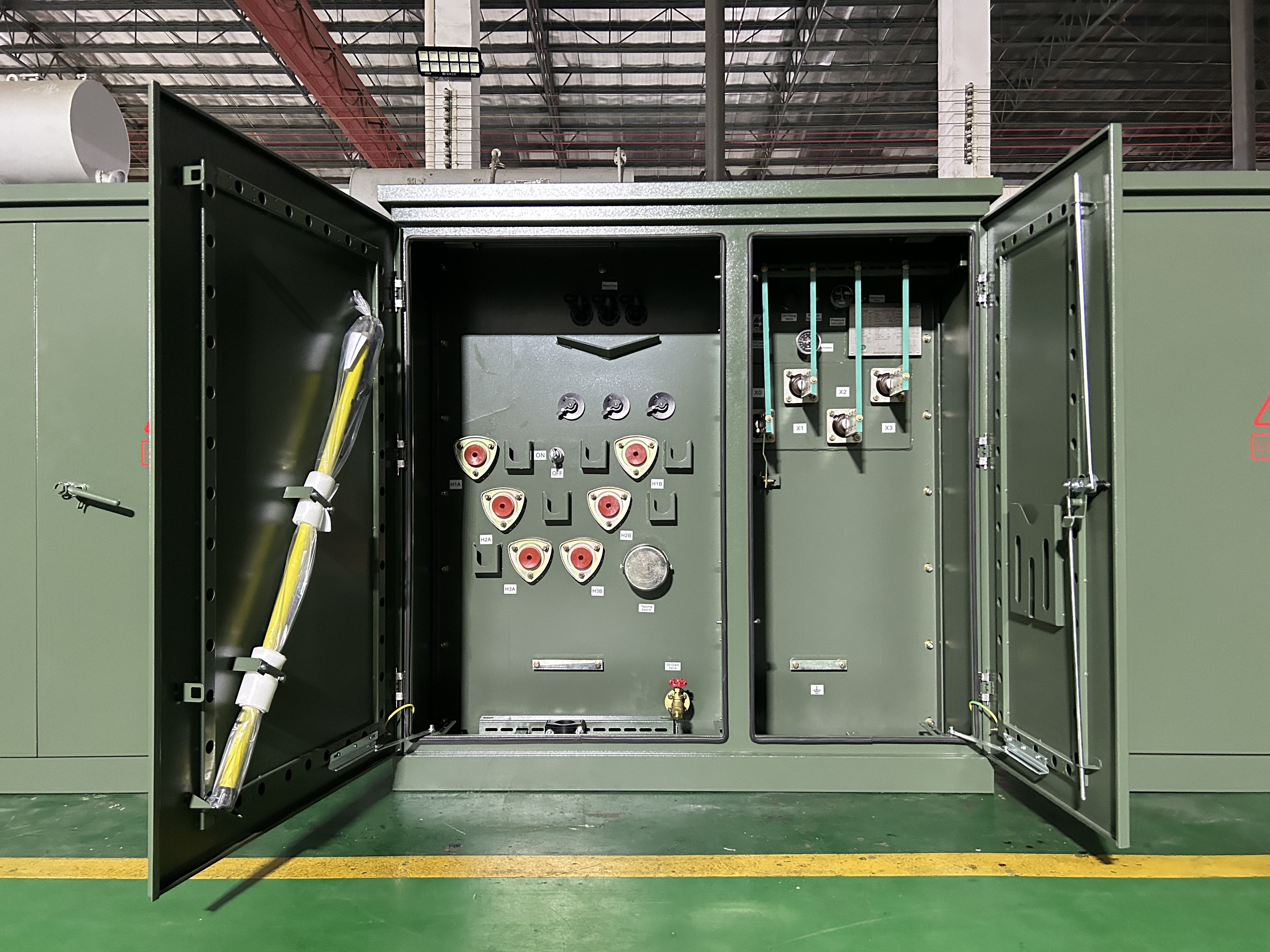
A robust 500kva pad mount transformer from Winley Electric, ideal for commercial power distribution.
Dry-Type Pad Mount Transformer
Uses solid insulation (like epoxy resin or vacuum impregnated materials) instead of oil. These are inherently fire-resistant and environmentally safer.
Best for: Indoor installations, multi-story buildings, tunnels, environmentally sensitive areas, or locations with strict fire codes. Winley Electric offers advanced Dry-type Pad Mount Transformer solutions with cast resin technology for superior performance.

A dry type pad mounted transformer suitable for indoor or restricted-space applications.
Step 3: Verify Compliance with Standards and Certifications
Never compromise on safety and compliance. Your transformer must meet the standards of your region.
- North America: Look for transformers built to ANSI standard and IEEE standard. Crucially, ensure they are UL listed and/or cUL certified. Winley Electric holds both UL listed pad mounted transformer and cUL certified pad mounted transformer certifications, a testament to their commitment to safety and quality that meets rigorous North American market requirements.
- Other Regions: IEC standards may apply. Winley Electric designs transformers compliant with ANSI, IEEE, CSA, DOE2016, NEMA, and IEC standards, offering global flexibility.
Always request certification documents from your pad mounted transformer manufacturers. Reputable manufacturers like Winley Electric provide transparent access to their UL and cUL certificates, along with ISO 9001 for quality management.
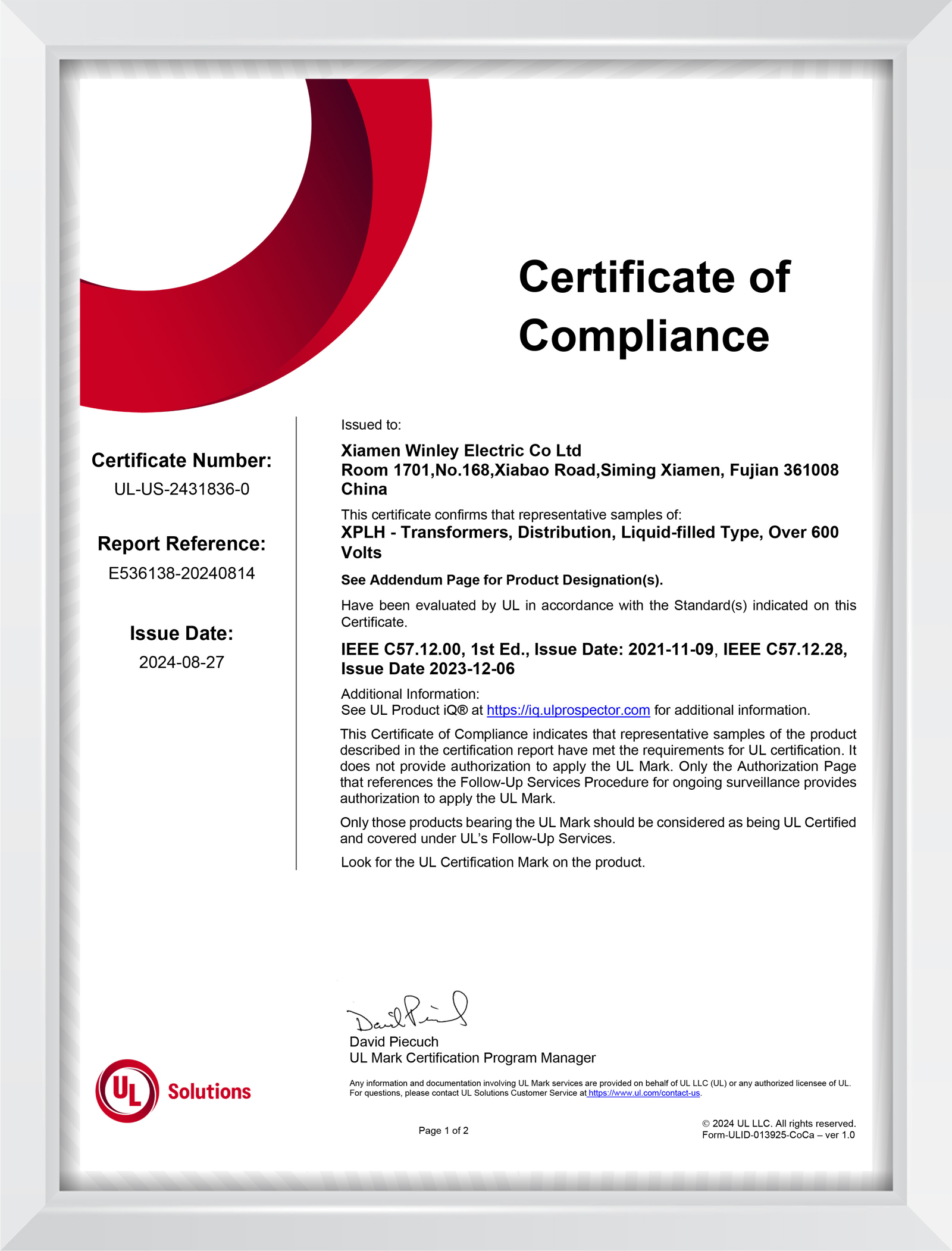
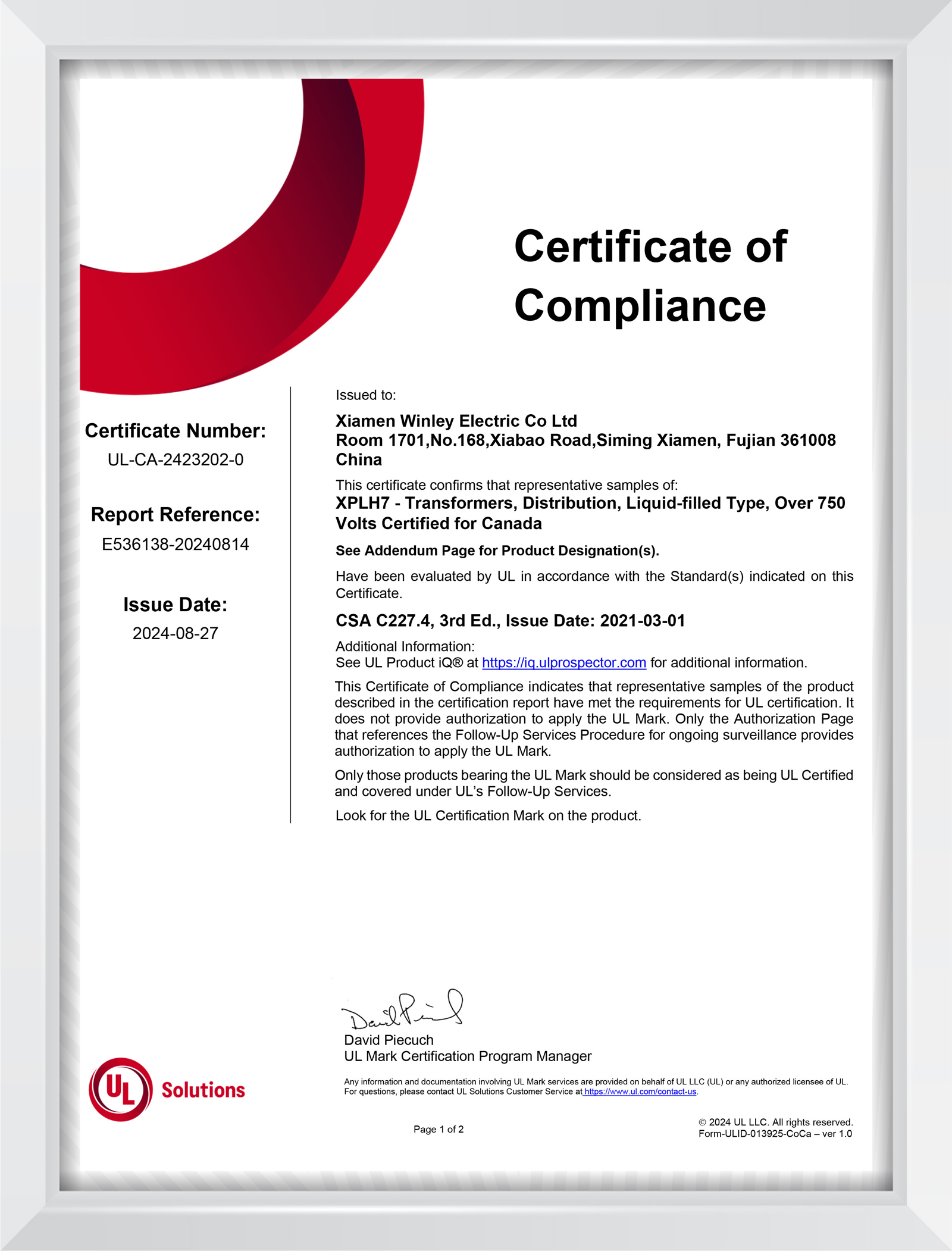
Examples of UL and cUL certifications held by Winley Electric for their three-phase pad-mounted transformers.
Step 4: Partner with a Reputable Manufacturer and Finalize Specifications
Choosing the right partner among pad mounted transformer manufacturers is as important as choosing the product. Look for experience, technical support, and customization capability.
Winley Electric, a professional transformer manufacturer founded in 2014 with over a decade of industry experience, exemplifies a reliable partner. With manufacturing facilities in Shanghai and Guangdong, and a headquarters in Xiamen, they specialize in transformers up to 145kV. Their team of senior engineers can customize cost-effective solutions, ensuring your pad mount transformers for sale are not just off-the-shelf products but tailored fits for your project.
Work with their engineers to finalize:
- BIL (Basic Impulse Level) rating.
- Winding material (copper or aluminum).
- Enclosure type (single-wall, double-wall, tamper-resistant).
- Accessories (lightning arresters, fused cutouts, pressure relief device).
- Special requirements for Pad Mount Transformers for Utility or Solar Pad Mount Transformer applications.

Winley Electric's advanced manufacturing facility, equipped with automated production and testing lines to ensure quality.
Step 5: Installation and Commissioning Checklist
Proper installation is key to performance. Always follow the manufacturer's instructions and local codes.
- Site Preparation: Construct a level, reinforced concrete pad of adequate size and strength as per the transformer's footprint and weight (e.g., a 2500 kva pad mounted transformer will require a substantial foundation). Ensure proper drainage.
- Delivery & Placement: Use appropriate lifting lugs. Never lift by the bushings or cables. Position the transformer accurately on the pad.
- Electrical Connections: Connect the high-voltage and low-voltage cables according to the wiring diagram. Use proper torque on all connections. For an Oil-immersed Pad Mount Transformer, check the oil level gauge after placement.
- Grounding: This is critical for safety. Connect the transformer tank and neutral (if applicable) to a low-resistance grounding electrode system.
- Pre-Energization Checks:
- Verify all internal and external connections are tight.
- Check insulation resistance (megger test).
- Ensure the pressure relief device is functional.
- Remove all shipping braces and temporary grounds.
- Energization: Energize the transformer gradually if possible. Monitor for unusual sounds, odors, or heating.
For complex projects, leveraging the 24/7 comprehensive technical support offered by manufacturers like Winley Electric can be invaluable. They provide installation guidance, drawing design review, and acceptance support.
Your Trusted Partner in Power Distribution
Selecting and installing a pad mounted transformer is a significant decision. By following this guide and partnering with a certified, experienced manufacturer like Winley Electric, you ensure a reliable, safe, and efficient power distribution solution for your utility, commercial, or solar project.
With products exported to over 60 countries, UL/cUL certifications, and a decade-long reputation for "zero quality problems," Winley Electric stands as a leading choice among global pad mounted transformer manufacturers.
Contact Winley Electric Today for Your Custom Transformer Solution:
Website: https://www.winley-electric.com/
Email: steven@winley-electric.com | Tel: +86-592-5510031 | WhatsApp: +86-18650108051
Address: No.168, Xiabao Road, Siming, Xiamen, Fujian, China
Have Questions or Need More Details?
Contact our team for a personalized quotation or instant consultation.
Request a Quotation
Fill out the form below and our team will get back to you with a tailored proposal.
WhatsApp Direct Chat
Prefer to chat in real-time? Message us on WhatsApp for instant assistance & quick answers.
- Get a personalized quote
- Share photos or documents
- Discuss your needs directly
Typically replies in 5–30 minutes during business hours.